
Avoid Costly Rework: 10 OEM Scrubs Mistakes That Delay Production
Avoid Costly Rework: 10 OEM Scrubs Mistakes That Delay Production
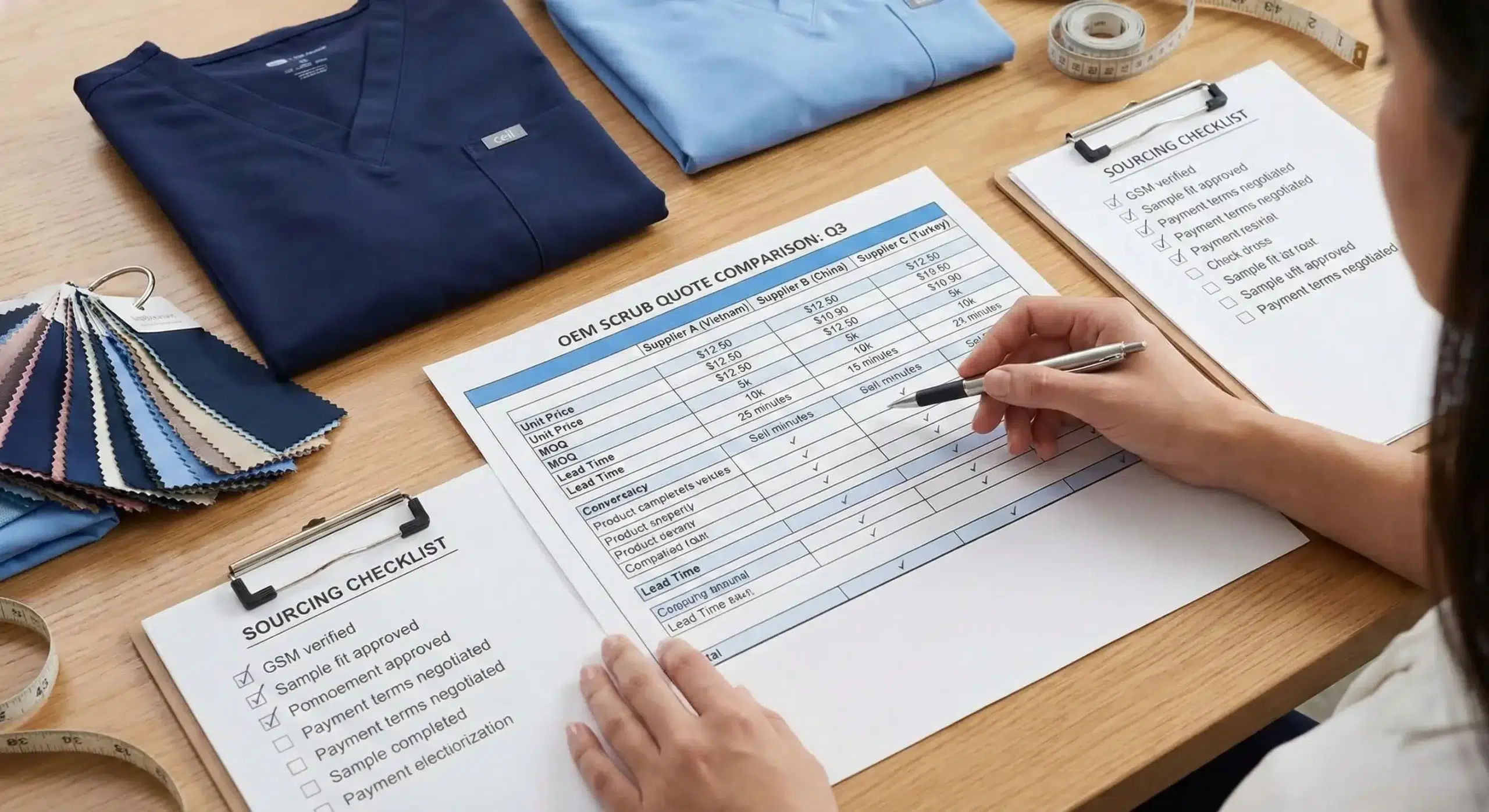
Rework is the silent budget killer in OEM medical scrubs.
It doesn’t usually happen because a factory “can’t sew.” It happens because the buyer and the factory aren’t working from the same definition of done—so the sample looks fine, but bulk production drifts. Then you’re stuck: redo the sample, redo the labels, re-approve color, re-quote packaging, re-book shipping.
If you’re building a scrub program for a clinic group, a hospital vendor list, a brand drop, or a uniform contract, this guide is meant to keep you out of that loop.
You’ll get:
-
the 10 most common OEM scrub mistakes that delay production
-
the fix for each one (what to send, what to lock, what to ask)
-
a simple buyer workflow so your sample → PP → bulk stays consistent
If you’re still deciding what kind of partner you need, start with medical scrubs manufacturer before you compare quotes.
And if you want a quick sanity check on your project before sampling, you can always Request a quote.
1) What “rework” really means in OEM scrubs
In OEM medical scrubs, “rework” usually shows up as one of these:
-
sample revisions that keep happening for unclear reasons
-
bulk hold because PP sample isn’t aligned with the approved sample
-
color drift between batches
-
labeling/packaging surprises caught too late
-
measurement inconsistency that turns into returns or reorders you can’t use
Most of it is preventable if you lock the right things at the right time.
2) Quick table: 10 mistakes + fixes
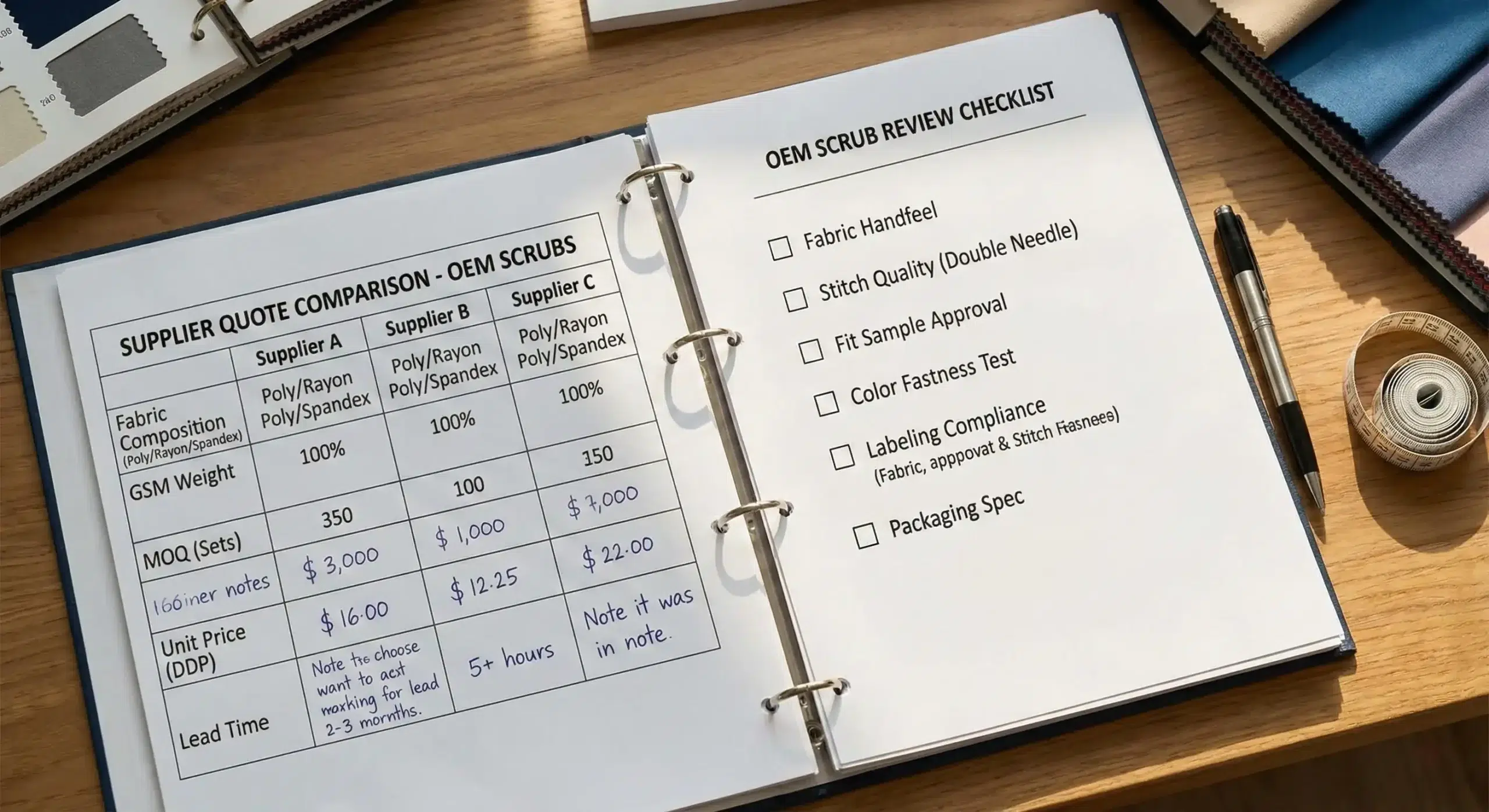
| Mistake | What it looks like | Why it delays production | The fix | What to ask / send |
|---|---|---|---|---|
| Vague fabric spec | “Stretchy & soft” only | Quote + sample mismatch | Lock composition + weave + GSM | Use a spec sheet; confirm tests |
| Color approval too late | Approving “navy” by photo | Shade drift in bulk | Lab dips + tolerance rules | Follow color consistency scrubs |
| Missing size logic | Only one size sample | Bulk grading surprises | Define grading + tolerance | Provide measurement table |
| Branding details incomplete | Logo file + “put it here” | Rework after sewing starts | Placement + size + method | Artwork + placement diagram |
| Comparing non-comparable quotes | Different GSM/packing | Wrong supplier choice | Standard RFQ inputs | Use [[medical uniforms procurement]] |
| Sample ≠ bulk rules | Sample approved; PP ignored | Bulk hold / disputes | PP sample as “contract” | Document approval checkpoints |
| QC not defined | “QC included” only | Late defect discovery | Set QC checkpoints | Photos + AQL/defect rules |
| Packaging not locked | Carton marks decided last | Reprint + rework | Confirm packing specs early | Bag, sticker, carton details |
| Timeline built on optimism | “10 days sample” promise | Missed launch windows | Build buffers + dependencies | Map approvals & lead times |
| Switching factories mid-stream | Moving patterns without control | Reset approvals + fit drift | Plan a controlled transfer | Pattern ownership + spec lock |
3) The 10 mistakes
Mistake #1: Treating “fabric” as a vibe, not a specification
What happens: You ask for “soft stretch scrubs,” the factory quotes one fabric, and your sample uses another “close enough” option. In bulk, hand feel changes, shrink changes, or color behaves differently.
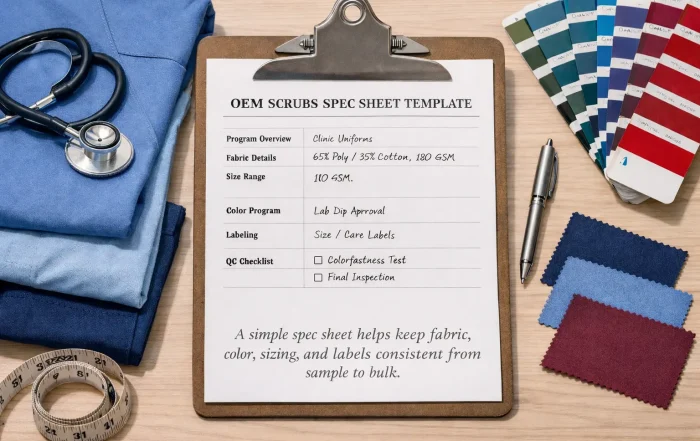
Fix: Lock three basics before you expect consistent results:
-
composition (example: poly/rayon/spandex)
-
weave/structure (twill, poplin, etc.)
-
GSM range (and tolerance)
If you already have the fabric family in mind, link it in your doc and reference scrub colors for how the color program should be protected over time.
Mistake #2: Approving color by photos (or approving it too late)
Photos lie. Lighting, phone sensors, even a slightly warm office bulb can make “navy” look right when it isn’t. Then bulk dyeing happens, and you’re stuck in the worst kind of argument: “It looks different.”
Fix: Pick one approval method and stick to it:
-
lab dip / strike-off
-
approved physical swatch reference
-
agreed tolerance rules (how close is “close enough”?)
If color consistency matters across reorders, this is where color consistency scrubs should be in your process.
Mistake #3: Using one sample size as the truth for a full size range
A size M sample doesn’t tell you how XL will drape or whether XS will feel too tight at the hip. The bigger the size range, the more grading decisions you’re making—whether you realize it or not.
Fix: Put basic grading logic in writing:
-
size range you will sell
-
key measurements that must stay balanced (chest/hip/rise/inseam)
-
tolerance (what variation you’ll accept)
Mistake #4: Branding instructions that can’t survive production
“Logo on chest” is not an instruction. It’s a suggestion.
Fix: Give production-safe branding details:
-
method (embroidery / heat transfer / woven label)
-
size limits (especially for embroidery)
-
placement anchored to seams, not “eyeballing”
-
file format requirements (vector if needed)
Mistake #5: Comparing quotes that aren’t truly comparable
The cheapest quote is often the quote with the most assumptions:
-
lighter GSM
-
simpler label package
-
different packaging
-
omitted tests or QC steps
Fix: Compare suppliers with a buyer lens, not a shopping lens. This is the mindset behind [[medical uniforms procurement]]—you’re choosing a system, not just a price.
Mistake #6: Letting sample revisions run without a decision log
This is where schedules die: “We changed the pocket,” “We changed the neckline,” “We changed the fabric feel,” but nobody writes down what’s now locked.
Fix: Use a simple decision log after each sample round:
-
what changed
-
what is final
-
what needs confirmation next round
You’ll stop repeating the same conversation with different words.
Mistake #7: Treating PP sample like a formality
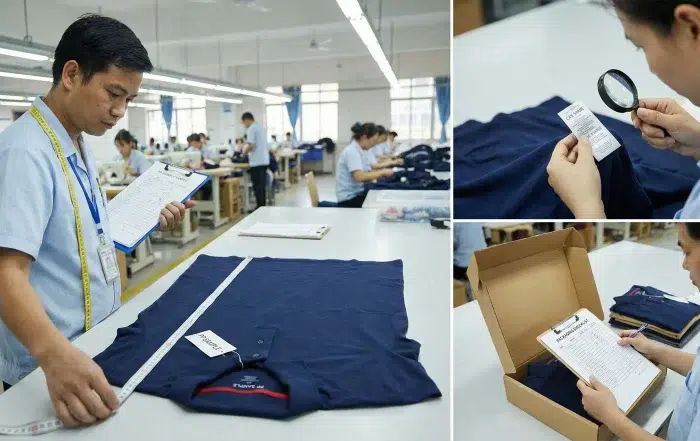
If the first sample is “design approval,” PP sample is “bulk permission.” Skipping it or rushing it is a classic way to ship something that’s almost right.
Fix: Make PP sample your production contract:
-
measurement check with tolerance
-
color approval method confirmed
-
labels, packaging, carton marks confirmed
-
QC checkpoints confirmed
Mistake #8: Not defining QC until defects show up
Factories can do QC, but “QC included” is vague. Different teams flag different defects as acceptable.
Fix: Define QC in plain language:
-
what defects are unacceptable (popped stitches, shade variation, needle damage)
-
where defects tend to show up (stress points, pocket corners, waistband)
-
what photos you want before shipping (random checks, measurement checks)
Mistake #9: Leaving packaging and labeling until the end
Packaging feels “easy,” until you realize:
-
barcodes are wrong
-
size stickers don’t match
-
care label language is missing
-
carton marks aren’t compliant with your warehouse rules
Fix: Lock packaging earlier than you think: -
individual bag spec
-
size sticker spec
-
carton markings
-
packing ratio rules
Mistake #10: Switching factories without controlling the handoff
Switching a scrub factory is risky because you’re not just switching sewing lines—you’re switching interpretation. Even if patterns are transferred, fit and finishing can drift.
Fix: If switching is unavoidable:
-
lock your spec sheet first
-
require a new PP sample (yes, even if it hurts)
-
run a controlled pilot order
-
compare against your approved reference, not memory
This is the “switch scrub factory risk” most buyers underestimate.
4) A buyer workflow that prevents delays (simple, repeatable)
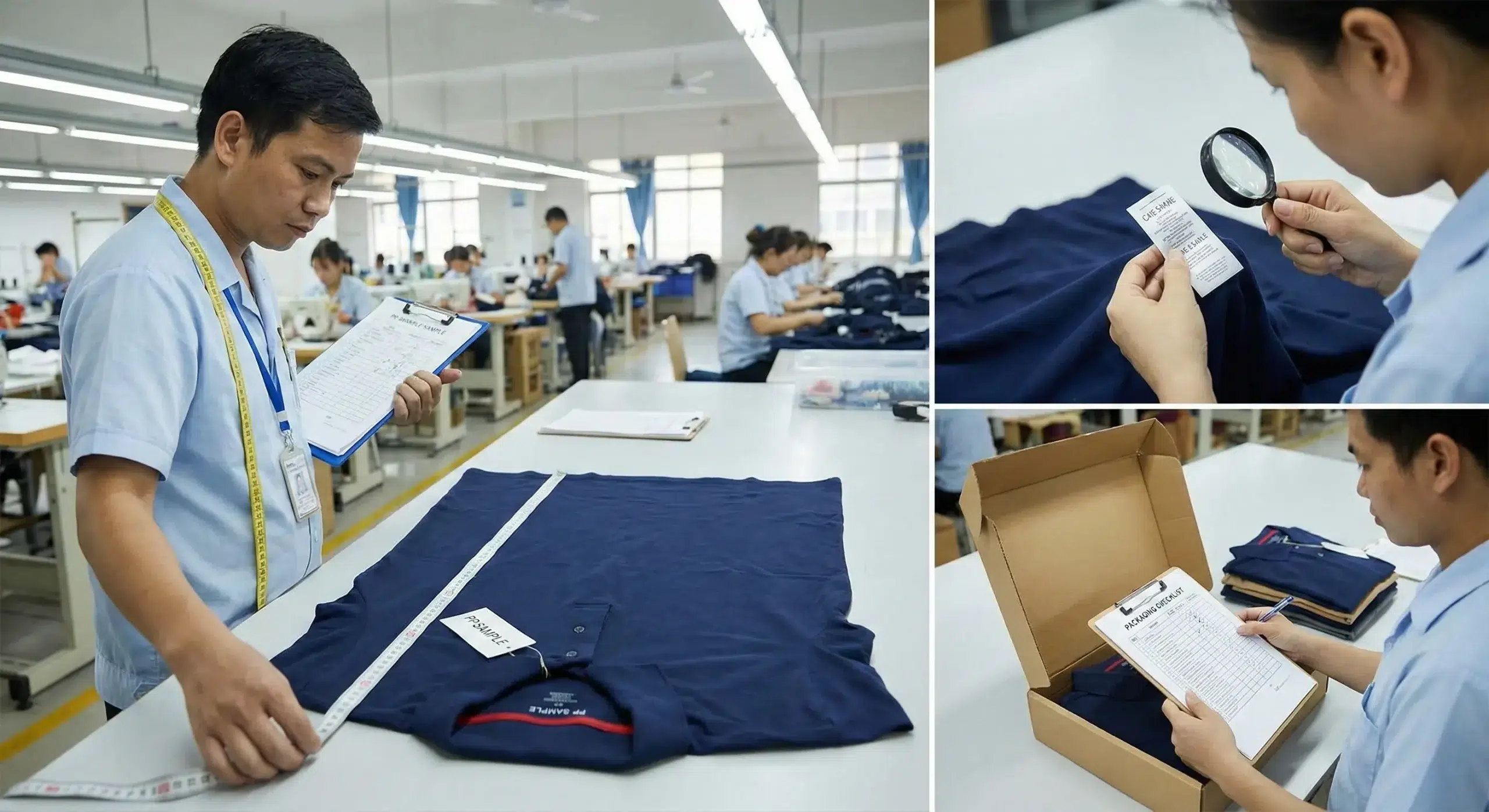
Here’s the workflow we see work best for OEM medical scrubs:
-
Lock the basics (fabric, GSM, color method, size range, branding method)
-
Request comparable quotes (same inputs → fair comparison)
-
Sample with a decision log (don’t drift)
-
Approve PP sample like a contract (color, measurements, labels, packaging, QC)
-
Bulk + reorders (protect color and spec over time with rules)
If you’re still choosing partner type, [[medical scrubs manufacturer]] is the hub that clarifies what you should expect from OEM vs private label vs “general manufacturer.”
When you want a second set of eyes on your inputs before sampling, that’s when project discussion.
FAQ
How many sample rounds are “normal”?
Two rounds is common when inputs are clear. Three happens when fabric/color/branding is still moving. More than that usually signals unclear specs or misaligned expectations.
What causes the biggest sampling delays?
Late color decisions, unclear fabric spec, and “we’ll decide labels later.” Those three alone can add weeks.
What’s the fastest way to avoid rework?
Make one document the source of truth (spec sheet + decision log). Then require PP approval before bulk.
If I only have budget to control one thing, what should it be?
Color + fabric. Fit can be tuned, but color drift ruins reorders and brand consistency.
Is switching factories always bad?
No—sometimes it’s necessary. But it must be controlled: spec locked, pilot run, PP approval, and comparison against the approved reference.
How do procurement teams prevent “quality surprises”?
They standardize inputs and define QC checkpoints. That’s the core idea behind [[medical uniforms procurement]].
A clear spec beats endless revisions
Rework doesn’t feel expensive when you’re still in sampling. It feels expensive when you’re already on a deadline and a “small change” forces you to redo color approval, labels, or measurements.
If you take one thing from this list, make it this: lock the basics early, and treat the PP sample like a contract. That’s how OEM scrubs stay predictable—across bulk and reorders.
If you want us to sanity-check your inputs (fabric, color method, size range, branding) before your next round, reach out here: Contact Us.