
Essential Ultimate Hospital Scrub Colors Guidelines
Essential Ultimate Hospital Scrub Colors Guidelines

Hospital Scrub Color Program: How to Standardize Colors Across Departments
Scrubs may look similar across hospitals at first glance. However, closer observation shows clear differences. These differences often appear in fabric, cut, and fit. The most noticeable difference is color. Color often reflects a specific role or department.
You may be a medical apparel startup founder. May also be a sourcing manager. You might face color confusion across departments. Or plan to upgrade your uniforms. In all cases, understanding common scrub colors helps you make better decisions.
This guide explains scrub color importance. It outlines common surub color codes. And also provides practical selection advice.
Understanding Hospital Scrub Color Coding
Hospital scrub color coding helps identify staff quickly. Staff work in fast-paced environments. Clear identification improves efficiency. Patients also benefit from clear visual cues. And they can recognize staff roles more easily.
Hospitals often require strict color standards. Procurement teams must follow these standards. Color selection becomes a key purchasing decision. The right colors ensure compliance. The right colors also define roles clearly. In addition, they support a professional image.
Why Hospital Scrub Color Coding Matters
Incorrect color choices create real problems. Staff may be misidentified. Workflows may slow down. In some cases, rules may be violated.
For example, a nurse may wear the wrong color. Others may mistake the nurse for a technician. This confusion can delay tasks.
Scrub color coordination serves several functions:
1.Enhanced visibility
Clear colors help distinguish roles. Doctors and nurses often wear different colors. Staff identification becomes faster.
2.Professional image
Consistent colors create authority. Patients feel more confident. Trust improves during treatment.
3.Discipline and Order
Uniform colors promote discipline. Staff appearance becomes consistent. The workplace looks more organized.
The Most Common Scrub Color Coding in Hospitals
| Department / Role | Standard Color | D-Solution Benefits |
|---|---|---|
| Nursing & General Ward | Light Blue [cite: 30] | Creates a calm and reliable impression[cite: 31]. |
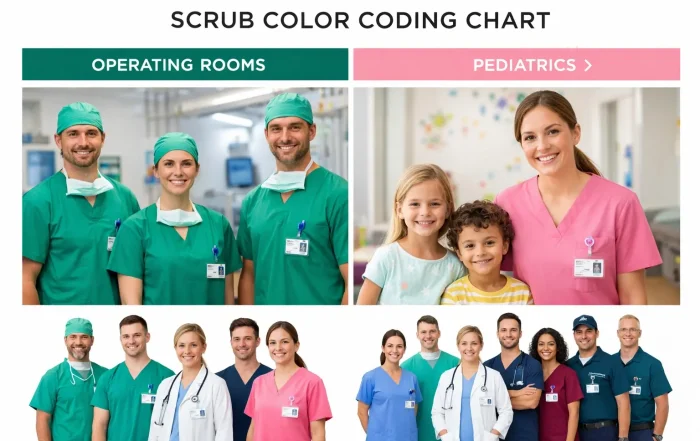
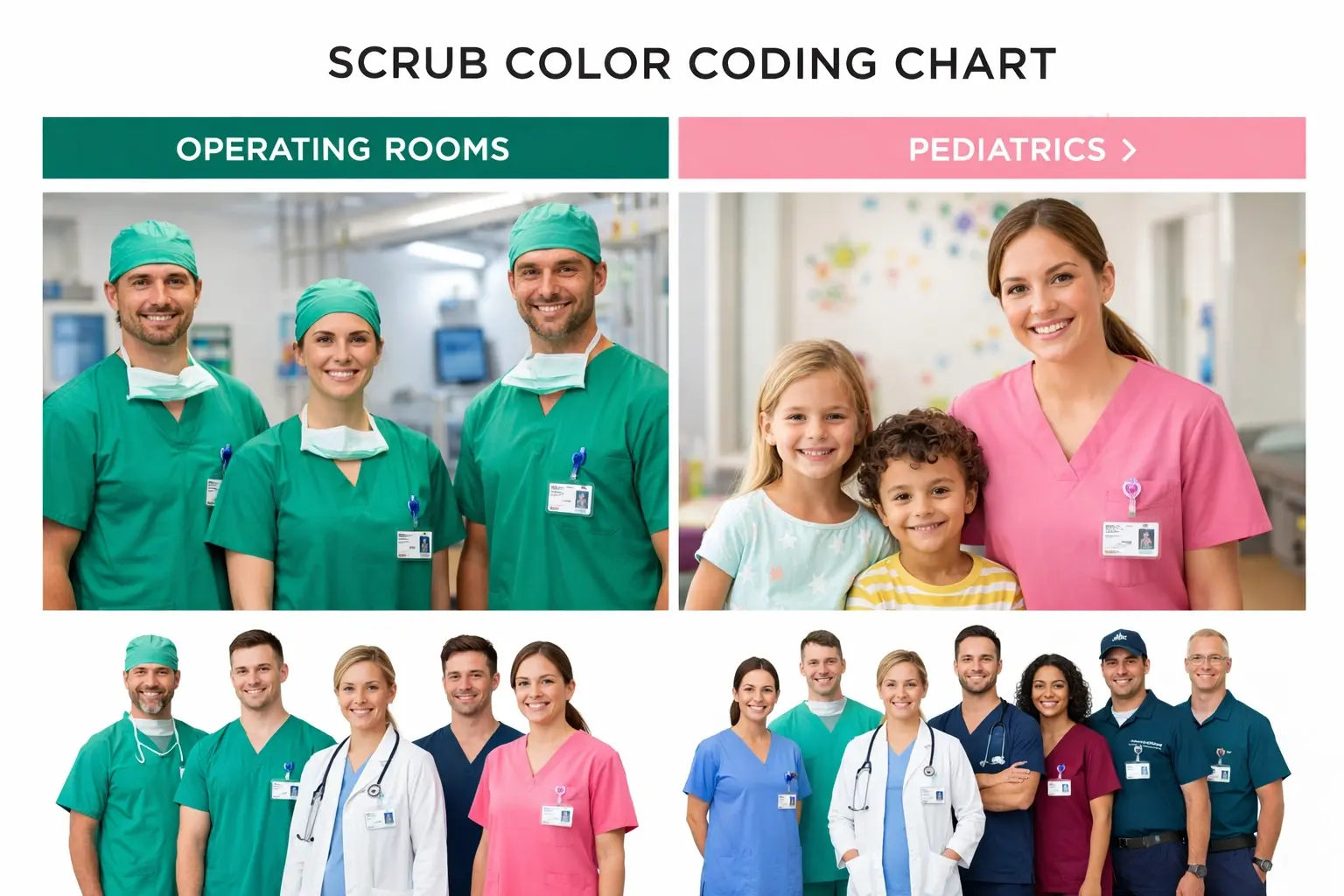
| Surgeons & ER/ICU | Green [cite: 32] | Helps relieve their eye strain and effectively prevents dizziness[cite: 35]. |
| Pediatrics & OB/GYN | Pink [cite: 39] | Creates a softer atmosphere[cite: 39]. Helps reduce patient anxiety[cite: 40]. |
| Dentistry & Outpatient | White [cite: 37] | Symbolizes cleanliness and sterility[cite: 37]. |
| Wellness & Elderly Care | Purple [cite: 41] | Suggests calmness and support[cite: 42]. |
| Administrative Roles | Burgundy [cite: 43] | Separate non-clinical roles from clinical teams[cite: 44]. |
| Lab & Maintenance | Gray / Black [cite: 45] | Support quick identification[cite: 45]. They also hide stains better[cite: 46]. |
* Swipe left/right to view full departmental solution details.
Hospitals use different systems. However, many follow similar patterns.
1. Blue / Light Blue
Blue is widely used. Many nurses wear blue scrubs. Most hospitals adopt blue as a standard color. It creates a calm and reliable impression.
2. Green
Green is typically the standard color for operating rooms. We all know that green can help alleviate eye strain to some extent. Similarly, it serves the same purpose during surgery. During procedures, surgeons must spend long periods observing red blood and tissue. Green helps relieve their eye strain and effectively prevents dizziness.
3. White
White scrubs are commonly worn by dentists and outpatient clinic doctors. White symbolizes cleanliness and sterility. And is also a symbolic color of medicine. Although white medical uniforms are not as prevalent today as they once were, they remain very popular.
4. Pink
Pink is common in pediatrics. It also appears in obstetrics and gynecology. The color creates a softer atmosphere. It helps reduce patient anxiety.
5. Purple
Light purple appears in wellness and therapy departments. It is also used in elderly care. The color suggests calmness and support.
6. Chestnut / Burgundy
Darker tones often mark administrative roles. Technical staff may also wear these colors. These tones separate non-clinical roles from clinical teams.
7. Gray / Black
Maintenance and cleaning staff often wear these colors. The colors support quick identification. They also hide stains better.
Why Mixing and Matching Scrubs Has Become Popular
Staff now seek more flexibility. Many prefer personalized looks. Color variation adds visual interest. It can also improve mood.
However, uncontrolled mixing creates problems. Poor combinations look unprofessional. Hospitals must balance flexibility with consistency.
Tips for Mixing and Matching Hospital Scrub Colors
1. Avoid high contrast
If a single scrub features two colors with particularly strong contrast. It can create a jarring visual impact. We recommend choosing harmonious colors. Such as navy blue and sky blue, to create a balanced and cohesive look.
2. Limit the Number of Colors
Clever color combinations can make your outfit look professional and refined, rather than chaotic. We do not recommend mixing more than three colors on a single garment to avoid a cluttered appearance.
3. Avoid excessive design elements
Large-scale color blocks or multiple patterns are not suitable for hospital scrubs.
When reordering scrubs, if you’d like to learn more about color-matching techniques suitable for modern hospitals, please contact our team directly. Lano Wear will provide professional solutions tailored to your needs.
Benefits of Sourcing Medical Scrubs in Bulk
Hospitals manage large teams. Bulk sourcing improves efficiency. Direct sourcing from manufacturers offers several advantages.
1. Cost savings
Factories reduce middle costs. Bulk orders lower unit prices. Procurement budgets become easier to manage.
2. Customization support
The key difference between a trading company vs manufacturer is that manufacturers offer customization and a high degree of personalization. If you want to procure a batch of stylish and personalized scrubs for your hospital. Choosing a scrubs factory is a great option.
3. Faster delivery
Factories control production schedules. Direct shipping reduces delays. Orders arrive more quickly.
4. Higher reliability
There are differences among OEM scrub suppliers. Such as whether they own their own factories. Their production capacity, and the reliability of their delivery schedules. Choosing a major manufacturer like Lano Wear can minimize potential issues during the ordering process.
Step-by-Step Guide to Sourcing Bulk Medical Scrubs
1. Define Color Codes
Determine the primary colors for different departments and define color codes for each. For example, the primary color for outpatient nursing scrubs is light blue, green for the emergency room or ICU. And pink for pediatrics and obstetrics/gynecology.
2. Screen and Evaluate Suppliers
Compared to ODM suppliers. Choosing an OEM supplier offers greater flexibility during the purchasing process. They typically offer lower prices. And allow for direct customization of colors and designs. That can reduce misunderstandings and improving efficiency.
Of course, the capabilities of OEM suppliers vary. You should not assume that all factories meet the same standards. Before placing an order, verify the factory’s transparency. A structured checklist helps mitigate procurement risks. Compare manufacturers before placing an order. It is best to inquire about factory audits, production certifications, sample fees, and lead times.
3. Sample Production
Check the fabric’s texture and the actual color appearance. This step is crucial for verifying color accuracy and minimizing the risk of receiving goods that do not match the sample.
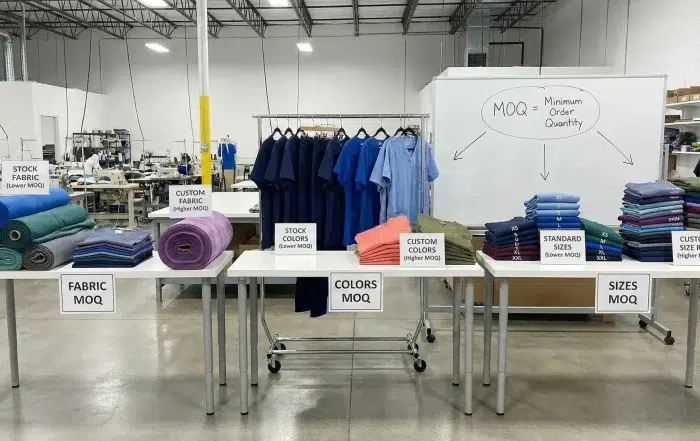
4. Determine Unit Price (FOB/EXW), MOQ, Production Lead Time, etc.

Implementing Your Hospital’s Strategic Color Solution
As healthcare systems continue to evolve, the shift toward standardized medical apparel has become a strategic necessity for balancing operational function with a cohesive professional image. Implementing a precise scrub color program is not merely an aesthetic choice; it is a solution that directly improves internal communication, boosts staff efficiency, and strengthens institutional identity.
Lano wear specializes in transforming these complex departmental requirements into high-quality, tangible products. With years of dedicated OEM experience, we provide a complete manufacturing solution that adheres to the strictest institutional standards for both color accuracy and fabric integrity.
Whether you are a medical startup or a procurement manager looking to upgrade your current uniforms, Lano Wear offers the customization and reliability needed to streamline your supply chain. Let our team provide the professional, cost-effective solutions your facility deserves.