
MOQ Explained for Medical Scrubs: What Affects It (Fabric, Colors, Sizes)
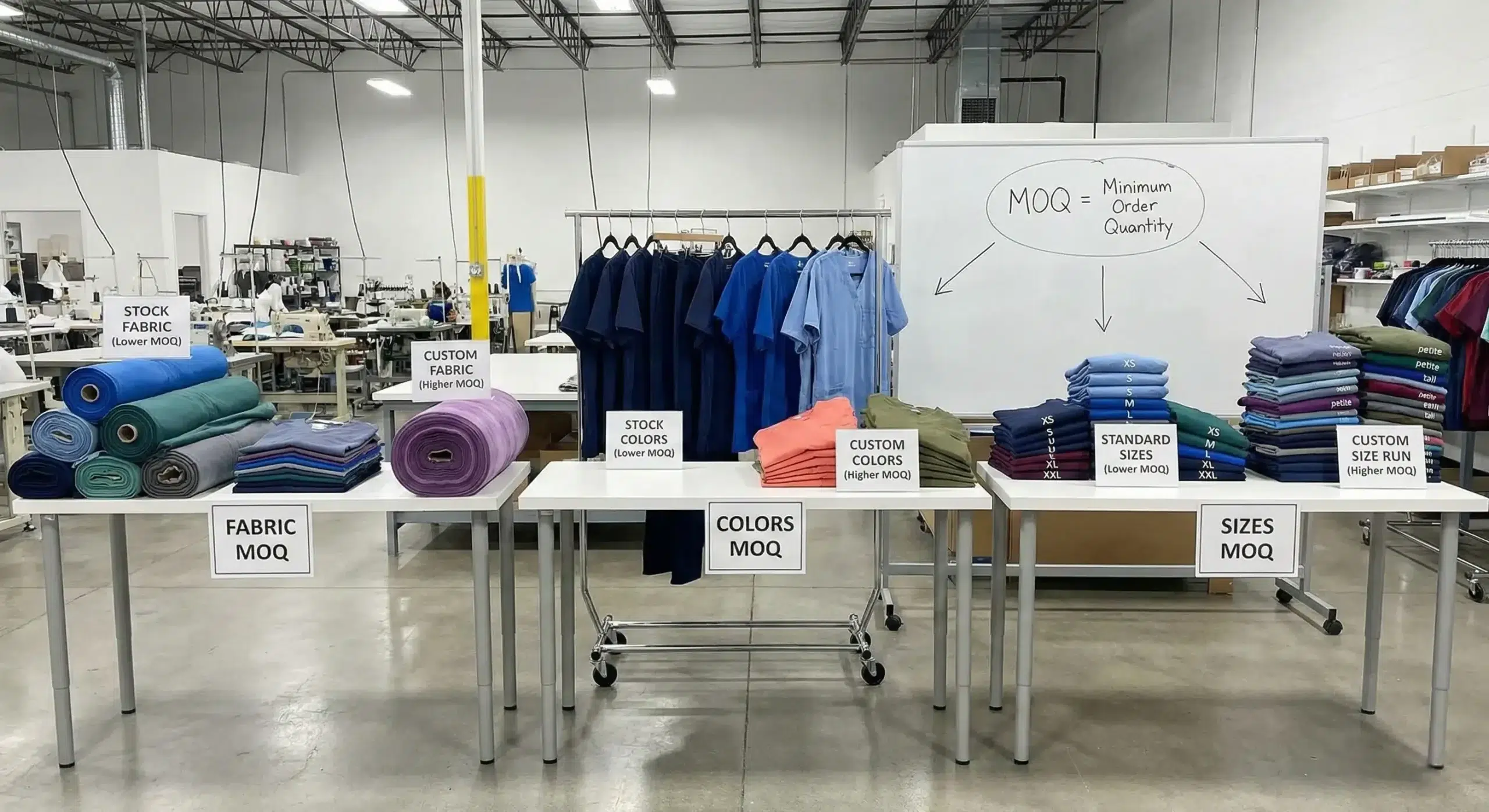
If you’ve ever asked three factories for MOQ and got three different answers, you’re not crazy—and they’re not necessarily lying. MOQ for medical scrubs isn’t one fixed number. It’s usually the result of three moving parts: fabric availability, color decisions, and how efficiently the order can be cut and packed.
Here’s the practical takeaway:
If you want a lower MOQ without sacrificing quality, the fastest levers are usually (1) choose an in-stock fabric, (2) limit the number of colors at launch, and (3) keep trims/labels simple and consistent. Sizes are often the least “dangerous” part—most factories can mix sizes as long as the fabric and color are the same.
In this guide, I’ll break down what actually drives scrub MOQ (fabric, colors, sizes), how to ask for MOQ the right way, and how to avoid the classic “surprise minimum” that shows up after sampling.
MOQ drivers at a glance
Use this mini table to understand what’s really changing the MOQ when suppliers quote you.
| MOQ driver | What it changes | What buyers can do |
|---|---|---|
| Fabric availability | Stock vs custom fabric, finishing, stretch, performance targets | Start with in-stock fabric; confirm composition, weave, and GSM early |
| Colors (by colorway) | Dyeing/printing minimums, shade consistency, matching standards | Launch with fewer colors; use existing shade cards when possible |
| Sizes (size range) | Grading complexity, pattern set-up, extreme size ratios | Mix sizes under one color; provide realistic size ratios upfront |
| Trims & labeling | Woven labels, heat transfers, hangtags, packaging components | Standardize trims across styles; avoid “custom everything” at launch |
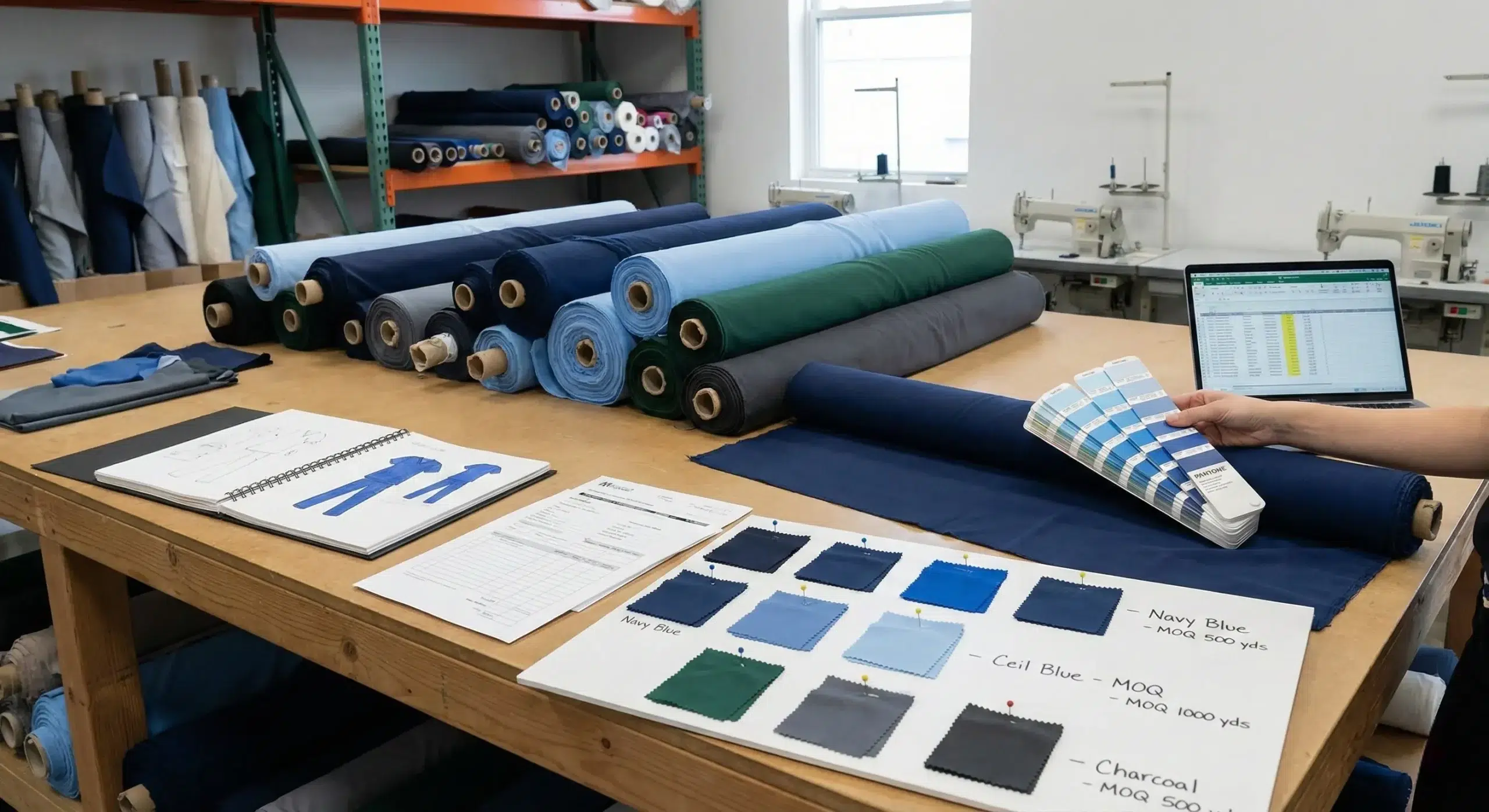
1) Fabric is usually the biggest MOQ lever
Factories can only sew what they can reliably source. The moment you move from “available fabric” to “custom fabric,” MOQ can jump—because the minimum often comes from the fabric mill, not the sewing line.
What typically increases MOQ on the fabric side:
-
Custom composition or weave (e.g., a specific stretch twill with a particular hand feel)
-
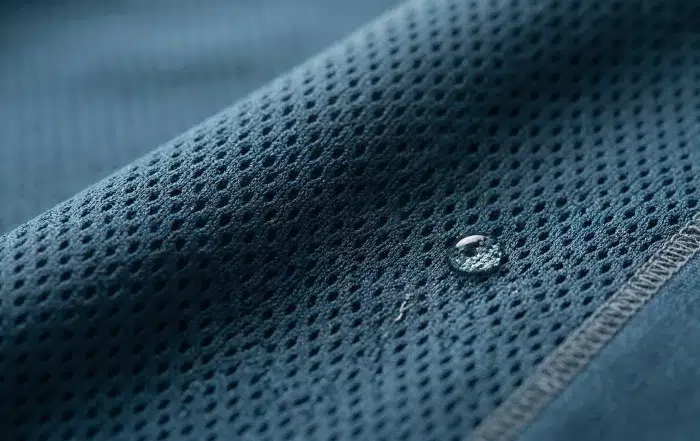
Special finishes (fluid resistance, antimicrobial treatments, “cool-touch” finishing)
-
Tight weight targets (GSM) when the mill needs to produce a dedicated run
If you’re not sure how GSM changes performance, your best internal reference is scrub fabric gsm. GSM is one of those details that sounds small, but it affects breathability, drape, opacity, and how the garment feels after repeated washing.
Also, if you’re still deciding “what fabric even makes sense for scrubs,” start with scrub fabric and then narrow down to your preferred structure in scrub fabric blend. That way your MOQ conversation is grounded in a real fabric direction—not vague words like “premium.”
2) Colors: MOQ is often “per color,” not “per style”
Buyers often think: “My MOQ is 500 sets.”
Factories often think: “Your MOQ is 500 sets per color (or per fabric color run).”
Why? Because color isn’t just an aesthetic choice—it’s a production run decision.
What raises MOQ on the color side:
-
More colorways (each color may require its own dye lot and control)
-
Strict shade matching (when you need consistent reorders, not “close enough”)
-
Multiple materials in one garment (shell, rib knit, pocketing, thread color, labels)
A clean way to keep MOQ manageable:
-
Launch with fewer colors, prove demand, then expand.
-
Use existing shade libraries first (many mills have standard blues, navys, blacks that are repeatable).
-
Decide upfront whether you want “brand-exact” matching or “within a family” matching.
This is also where buyers lose money later: they approve one sample, but bulk comes from a different dye lot. If reorders matter, treat color like a spec, not a guess.
3) Sizes: usually flexible, unless you make it complicated
Good news: sizes are often the least likely factor to raise MOQ—as long as the fabric and color stay the same.
Most factories can mix sizes within a colorway because they’re cutting from the same fabric roll. Where it gets tricky is when:
-
Your size range is very wide and your ratio is unrealistic (e.g., too many extreme sizes without demand)
-
You require different fits or patterns under one “style” (e.g., multiple blocks that act like multiple styles)
-
You add special requirements for extended sizing (fit balance, stretch behavior, grading rules)
If you want smoother quoting, include your size list and a rough ratio when you request MOQ. It helps factories plan cutting efficiency and packaging.
4) Labels, packaging, and “small custom details” add up fast
Even when fabric and colors are straightforward, MOQ can creep up because of components:
-
Custom woven labels
-
Care labels in multiple languages
-
UPC/barcode sticker systems
-
Hangtags, size stickers, custom polybags, carton markings
Sometimes the factory can source these at low minimums. Sometimes they can’t. Either way, you’ll get better answers if you ask two separate questions:
-
“What’s the MOQ for sewing the garments?”
-
“What’s the MOQ (or setup cost) for trims/labels/packaging?”
If you standardize trims across multiple styles, your future MOQs usually get easier—not harder.
How to ask for MOQ (so you don’t get a vague answer)
When buyers ask “What’s your MOQ?” without context, suppliers guess. A better ask is:
-
How many styles? (1 style vs multi-style program)
-
How many colors for the first run?
-
Stock fabric or custom fabric direction?
-
Size range and expected ratio?
-
Any branding (embroidered logo, labels, packaging)?
The more specific you are, the more “real” the MOQ answer becomes.
FAQ
Q1: Is MOQ usually per style or per color?
Often both. Factories may quote a style MOQ, but fabric and dyeing decisions can make it effectively a per-color minimum.
Q2: Can I mix sizes under one MOQ?
Usually yes—mixing sizes is common as long as the fabric and color are consistent. Provide a realistic size ratio for smoother planning.
Q3: Why does custom fabric push MOQ up?
Because the fabric mill may require a minimum run (especially if you want a specific composition, finish, or tightly controlled GSM).
Next step
If you want a realistic MOQ estimate (not a generic number), send your style count, target fabric direction, colors, and size range here: Request a quote / project discussion.