
OEM Medical Scrubs Spec Sheet: Fabric, Color, Size & Labeling
If you’re sourcing OEM medical scrubs for a brand, clinic group, or uniform program, the fastest way to lose time is letting the factory “fill in the blanks.”
Most quality headaches don’t start at the sewing machine. They start earlier—when details are unclear. Fabric weight drifts. Color gets “close enough.” Size tolerances are assumed, not agreed. Labels end up in the wrong place. Packaging changes quietly. Then the bulk arrives and you’re stuck explaining what you meant.
A simple spec sheet prevents that.
This page gives you a clean, buyer-friendly OEM medical scrubs spec sheet template you can copy and send. It’s not a full tech pack. But it covers the specs that cause the most delays and misunderstandings: fabric, color, size, labeling, and basic testing.
If you’re still deciding what type of partner you need, read medical scrubs manufacturer first.
If you want fabric guidance before you lock anything, start here: Request fabric swatches / fabric advice.
What this spec sheet is (and who it’s for)
-
This template is for buyers who want repeatable, factory-ready instructions—without needing a full tech pack on day one.
It’s especially useful when:
-
you’re comparing multiple factories and want apples-to-apples quotes
-
you’re launching a private label program and need consistency across reorders
-
you’re ordering for teams (size grading and color repeatability matter more than you think)
-
you’re dealing with suppliers who may interpret requirements differently
It’s also a good “bridge” document. You can use it now, then later upgrade to a full scrub tech pack template once your line is stable.
If you’re trying to compare factories objectively, use scrub manufacturer comparison alongside this sheet. It keeps quotes and promises on the same scoreboard.
-
Before you start: 5 buyer decisions that prevent rework
You don’t need to be a designer to fill this out. You just need to decide a few things before you ask for quotes—otherwise each factory will make different assumptions.
1.Where will these scrubs be used?
Clinic, hospital, hot climate, industrial laundry, etc. The “best fabric” depends on this.
2.What matters most for your buyer?
Pick the top 2–3: durability, breathability, stretch recovery, color consistency, softness, cost control.
3.How broad is your size range?
Standard only, or plus sizes too? If you want extended sizes, say it upfront. Don’t bolt it on after sampling.
4.How strict is your color program?
Some programs can live with a “family” of colors. Others need consistent shade matches across reorders.
5.What labeling and packaging do you actually need?
Private label scrub labeling and packaging are small details that create big delays when they’re not specified.
If you’re unsure how to grade for extended sizes, don’t guess. Use plus size scrubs bulk when that page is live.
The template
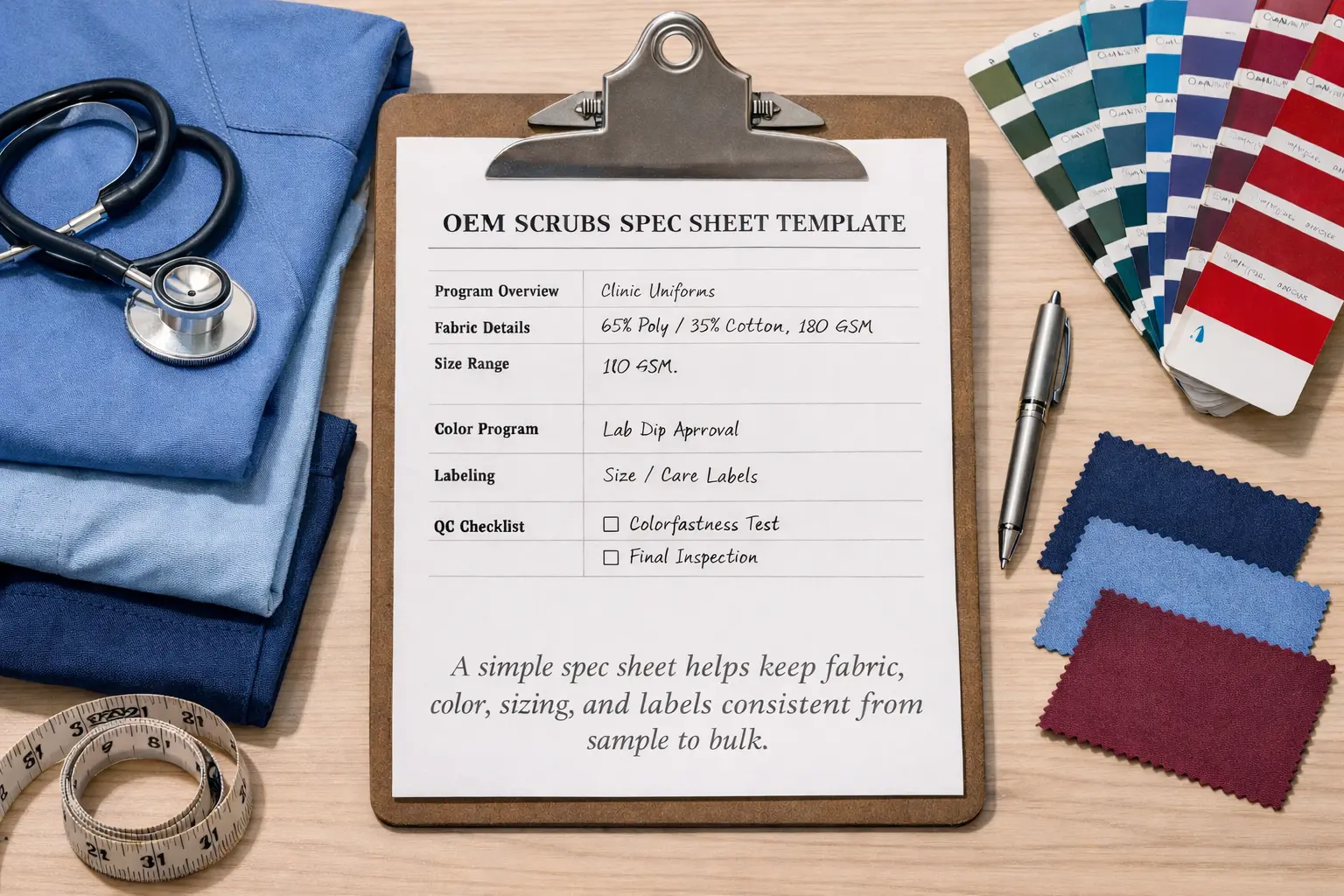
This is a practical medical scrubs size spec + fabric + labeling sheet. Keep it plain. Clear beats fancy.
One buyer tip that saves time: send this sheet with reference photos (front/back + label area). It prevents the “we interpreted it differently” loop.
OEM Medical Scrubs Spec Sheet
| Section | What to fill in | Example / Notes |
|---|---|---|
| Program overview | Buyer type + use scenario | “Clinic group uniforms, warm climate, daily wash” |
| Style scope | Items included | “Top + pant, unisex or women/men, jogger/straight” |
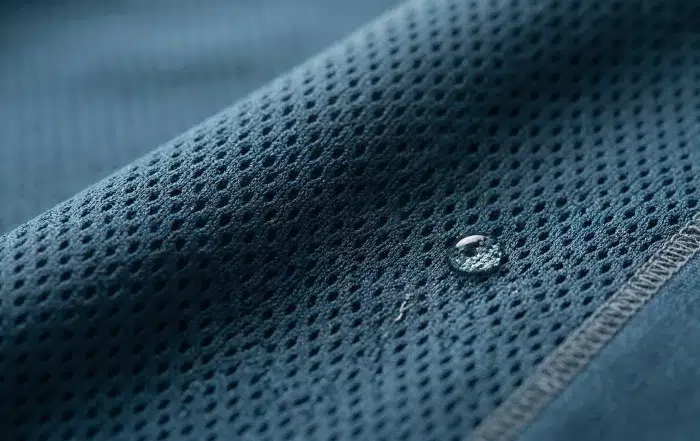
| Fabric selection | Composition + weave + GSM | Example: stretch twill, ~200 GSM (confirm target range) |
| Stretch requirement | 2-way / 4-way + recovery | “No bagging at knees/elbows after wear” |
| Hand feel target | Soft / crisp / cool-touch | Pick 1–2 words; avoid vague “premium” |
| Durability targets | Wash expectations | Home vs industrial; what must stay stable |
| Shrinkage control | Allowed shrinkage range | Set a target you can accept (verify by test) |
| Color program | Color names + reference method | Physical swatch / Pantone / lab dip |
| Color approval method | Lab dip / strike-off | Define when color is “locked” |
| Size spec | Size range + grading notes | XS–5XL; define how increments scale |
| Tolerance | Allowed measurement tolerance | Agree on tolerance + measurement method |
| Labeling | Brand + care + size labels | Placement + content + language |
| Packaging | Bag, size sticker, carton marks | Define barcode/UPC if required |
| Branding methods | Embroidery / heat transfer / woven label | File format + placement limits |
| QC checkpoints | What must be checked | Measurements, shade variation, defects |
| Required tests | Which tests apply | Washing/rubbing colorfastness, pilling, shrinkage |
| Sampling rules | Rounds + timeline | Define approval gates (PP sample) |
| Bulk approval | PP sample requirement | “Bulk starts after PP approval” |
| Shipping terms | Incoterms + documents | List required documents |
| Reorder rules | Repeatability requirements | Define what “match” means across batches |
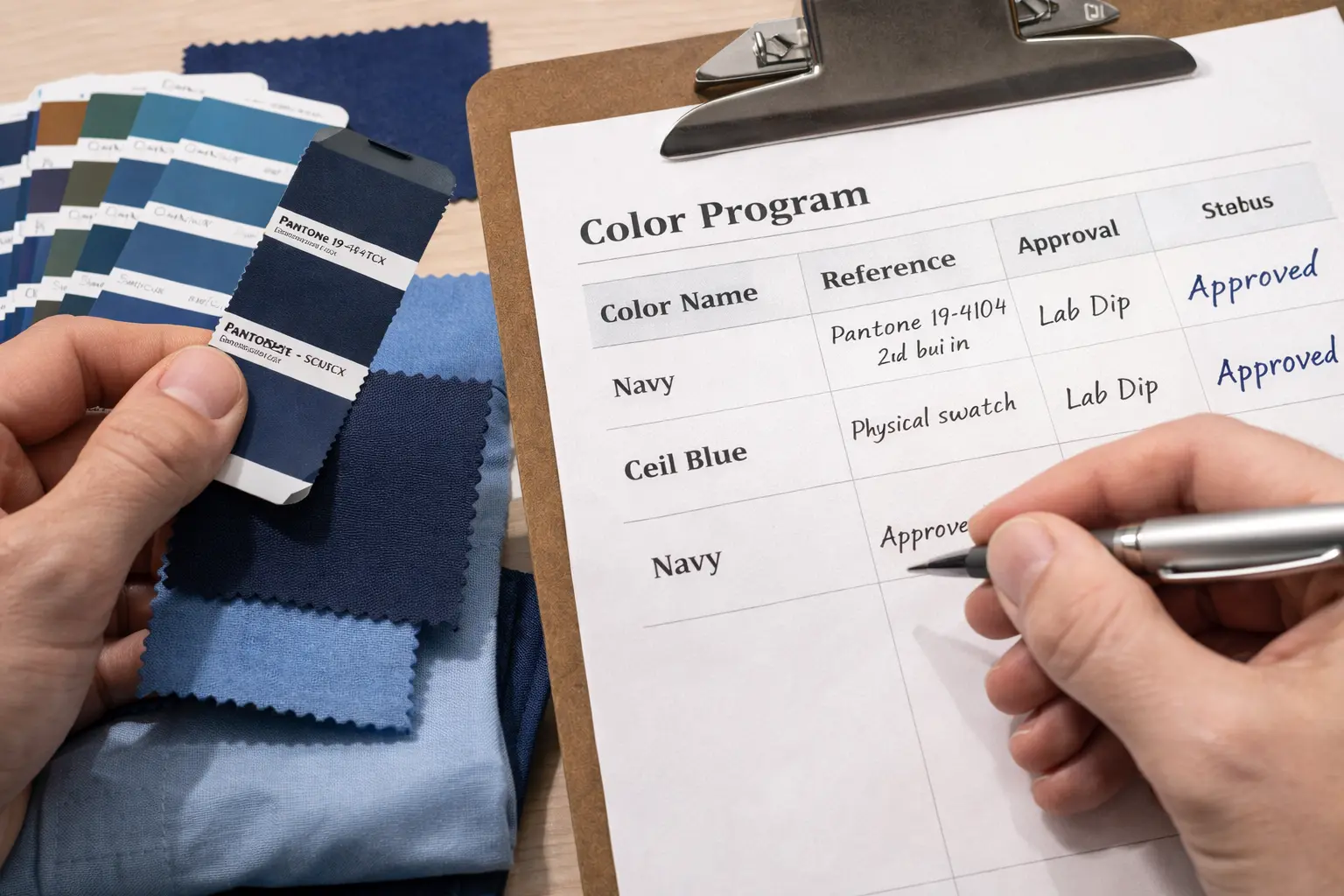
Color program (keep it simple and repeatable)
If colors are brand-critical, don’t rely on “navy” or “wine red” as the whole instruction. Use a reference method and an approval step.
Use this mini table:
| Color name | Reference | Approval method | Notes |
|---|---|---|---|
| Navy | Pantone / physical swatch | Lab dip approval | Match under consistent lighting (keep a physical reference) |
| Ceil blue | Physical swatch | Lab dip + fabric swatch | Clinic program standard |
If you want to control shrinkage and color performance in a more factory-ready way, link your spec sheet to scrub fabric spec. If that page isn’t live yet, temporarily link to your existing colorfastness/rubbing article.
How to use this in a real sourcing process (4 steps)
Step 1: Fill this out before you request quotes
Most quote comparisons fail because buyers ask five factories for quotes using five different descriptions. Then they wonder why the answers don’t match. One sheet fixes that.
Step 2: Send the same sheet to every factory
This is how you make quotes comparable. If one supplier quotes cheaper fabric, lighter GSM, different labels, or cheaper packaging, you’ll catch it quickly.
If you want a structured way to score suppliers, use scrub manufacturer comparison at the same time.
Step 3: Lock fabric + color approval before sampling
If you sample first and clarify fabric later, you’ll pay twice.
Before sampling, confirm:
-
the exact fabric quality (composition / weave / GSM target range)
-
how color is approved (lab dip, strike-off, approval timing)
-
what happens if bulk shade differs from the approved standard
If you want help narrowing down scrub fabric selection, use Request fabric swatches / fabric advice.
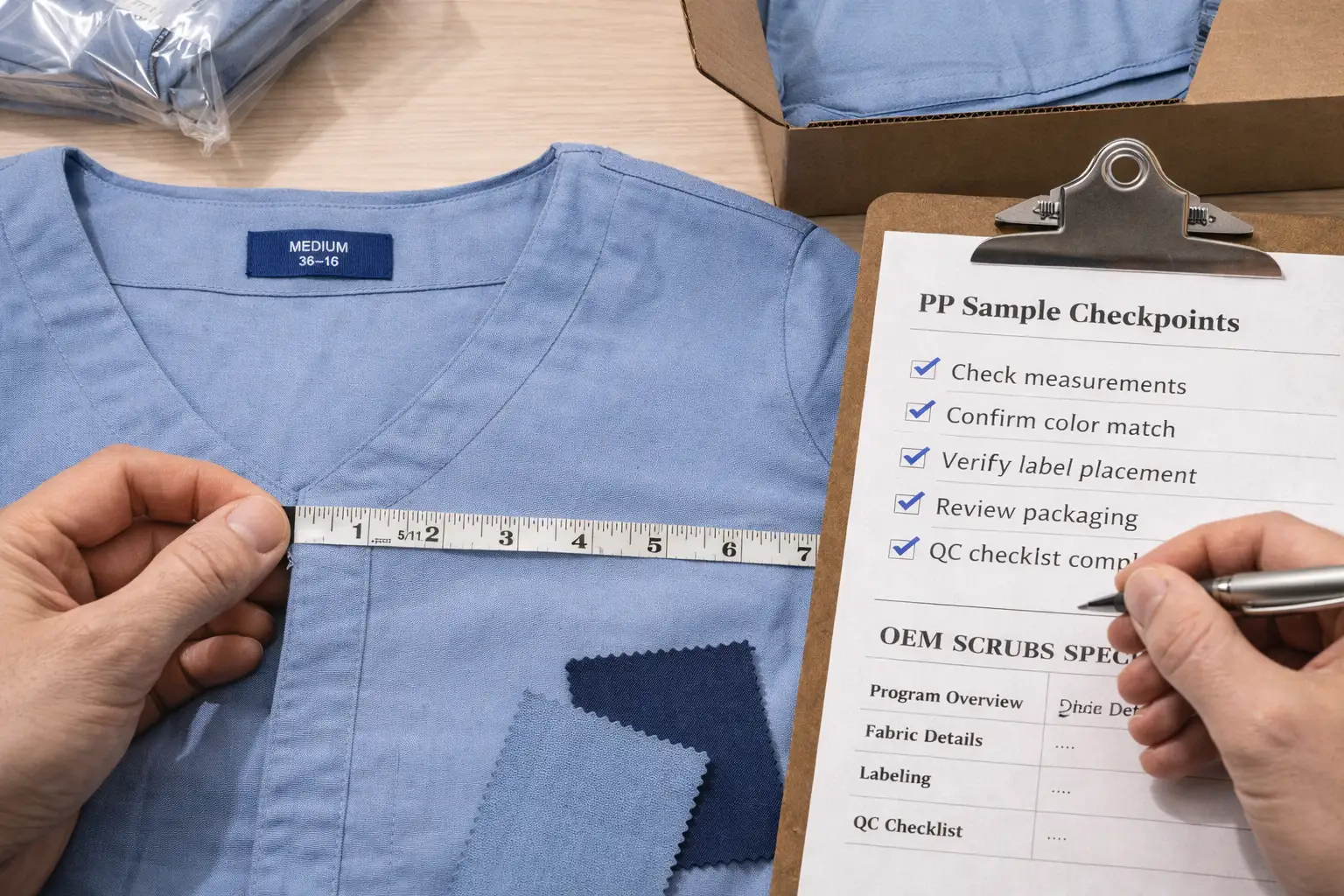
Step 4: Treat the PP sample as your “final contract”
This is where the sheet becomes real. Confirm:
-
measurement tolerance (and how it’s measured)
-
color under consistent lighting
-
labeling placement and content
-
packaging details
-
QC checklist
Once the PP sample is approved, bulk should become boring. That’s the goal.
Common mistakes (that cost time later)
1) Writing “high quality” instead of measurable targets
“High quality” can’t be checked. Factories can’t build to it.
Write what can be verified: GSM target range, tolerance, shrinkage target, colorfastness tests, labeling placement.
2) Letting the factory decide the color system
Color is where reorders go wrong. Define your reference method (physical swatch/Pantone/lab dip) and the approval step. Then keep that same reference for every reorder.
3) Adding plus sizes without grading rules
Plus size programs aren’t just “bigger measurements.” Fit balance and stretch behavior matter. If you’re doing extended sizing, use plus size scrubs bulk.
FAQ
1) Is this the same as a full tech pack?
No. A full scrub tech pack template includes construction details, seam specs, artwork callouts, and pattern instructions. This is a buyer-side spec sheet focused on sourcing decisions that most often break bulk consistency.
2) What’s the minimum I should specify for fabric?
At minimum: composition, weave type, GSM target range, and stretch direction (2-way/4-way). Then add your priorities: durability, breathability, softness, wrinkle behavior.
3) Do I really need testing standards in the sheet?
If consistency matters, yes. You don’t need to be overly technical. List the tests you want (washing colorfastness, rubbing colorfastness, pilling, shrinkage) and ask the supplier to confirm methods and results.
4) How do I prevent shade differences between sample and bulk?
Define the approval method (lab dip/strike-off), keep a physical reference, and require bulk to match the approved standard within an agreed tolerance.
5) Where does labeling usually go for private label scrubs?
Common placements: brand label at neck/back, care label on side seam, size label integrated or separate. The key is to specify content + placement + language so reorders don’t drift.
6) What should I send with this sheet to get accurate feedback?
Send the filled sheet plus: 2–4 reference photos, target size range, and your color reference method. That’s usually enough for a factory to respond clearly.
7) What’s the fastest way to get this reviewed?
Use Request a quote / project discussion and attach the filled sheet. If you’re still selecting fabrics, start with Request fabric swatches / fabric advice.
Next steps
If you want a factory-ready version of this template tailored to your program, start here:
And if you’re still building your supplier shortlist, don’t skip scrub manufacturer comparison. It’s the quickest way to avoid comparing quotes that aren’t truly comparable.