
OEM Scrub Manufacturer vs Private Label | Medical Scrub Buyer’s Checklist
OEM Scrub Manufacturer vs Private Label | Medical Scrub Buyer’s Checklist
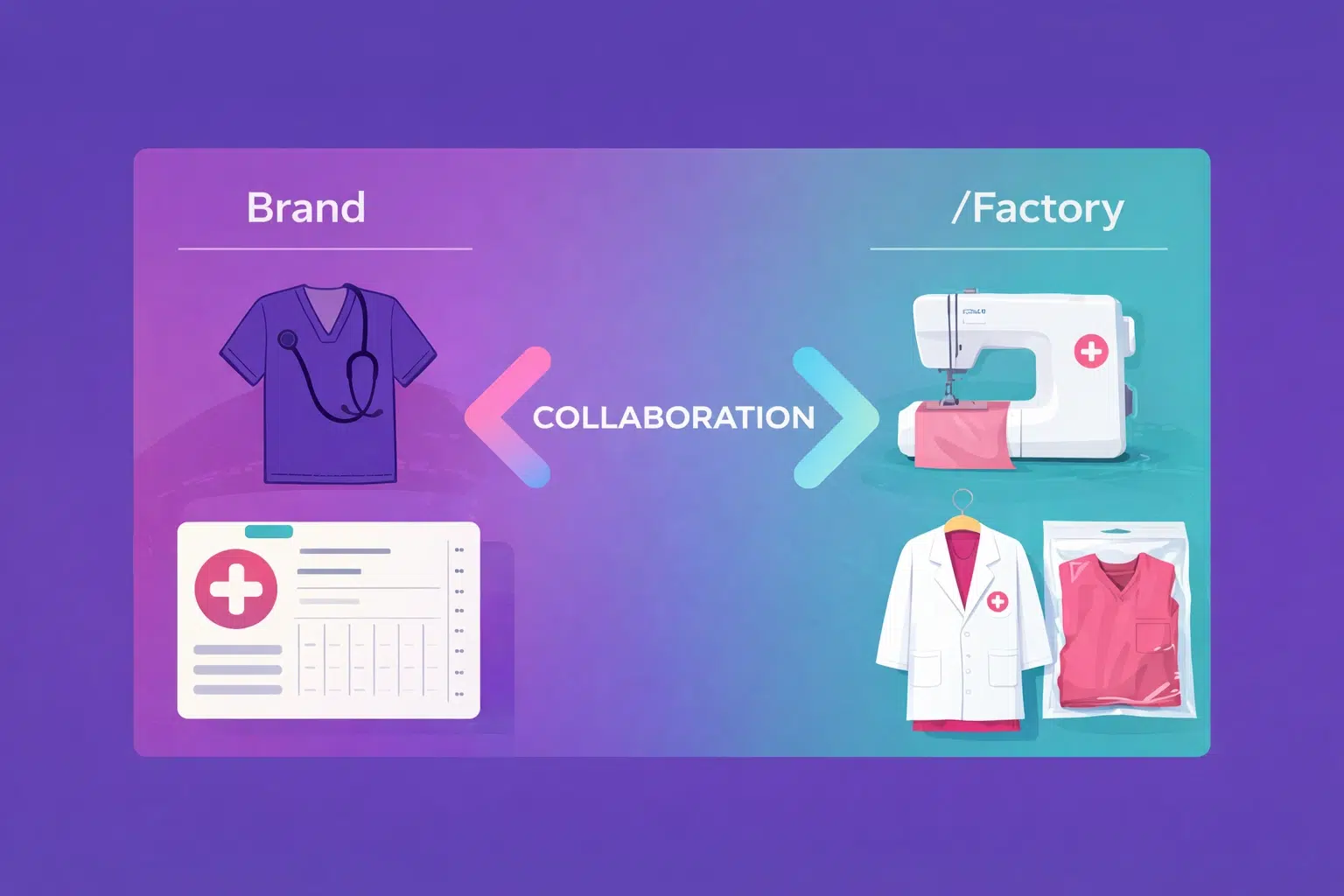
When you start to plan a brand new scrub program for a hospital, clinic, brand, or rental
service, you face an early decision that quietly sets everything that follows:
What kind of manufacturing partner should I work with?
On paper, many companies call themselves:
medical scrub manufacturers
OEM scrub factories
private label scrub suppliers
They all sound like “someone who can make scrubs for you,” but how they operate, what kind of help they offer, and how much say you have over your own products can be very different.
This guide explains:
What an OEM scrub manufacturer actually is.
How OEM compares with standard manufacturers and private label suppliers.
Which model fits different types of buyers better.
A list of questions you want to ask your partner before going with them.
By the end, you will be able to look at a potential partner and quickly see whether they are a real match for you.
Three main ways to get scrubs made
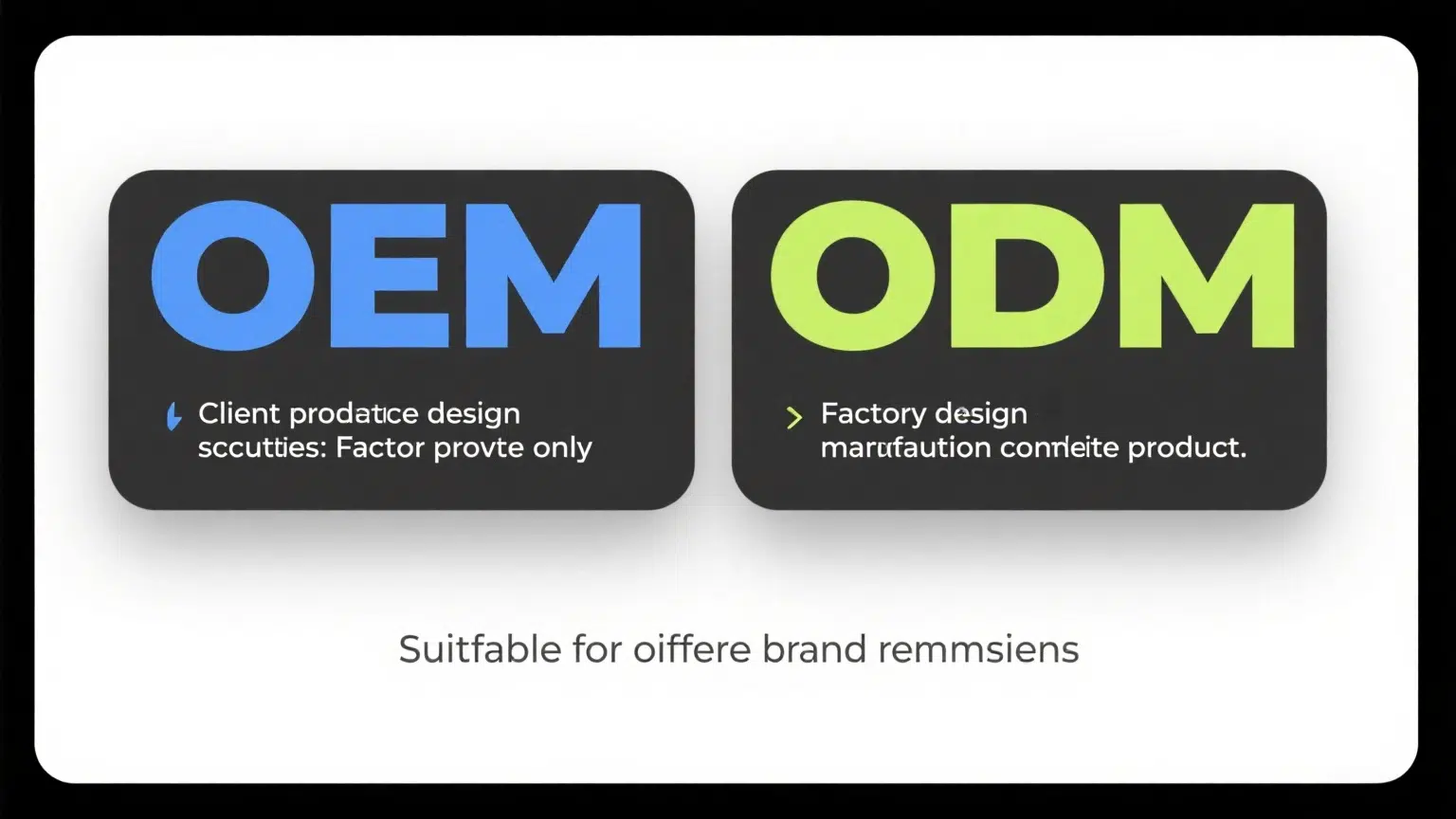
Most scrub projects end up going down one of three paths: you work with a scrub manufacturer, an OEM scrub manufacturer, or a private label/ODM supplier.. These labels are simple, but they hide very different ways of working together.
A medical scrub manufacturer is the most straightforward idea. This is the factory: they
cut the cloth, they sew the clothes, they press them, they put them in boxes and they send
them off. Theirs is production. And scrubs they see like a product – seams and shrink and
patterns and bulk production. If you have your own designs and a well-defined tech pack,
then a decent manufacturer is just what you might need. You give them the spec. They give
you the product.
An OEM scrub manufacturer is still producing, but they are one step closer to your brand.
OEM simply means that we make the product for you under your name, and help you build
or improve the specification. A perfect tech pack is not required on day one. You can start
from references to garments, ideas and constraints and co-create the final version with me.
A private label / ODM supplier is the lightest. They got their own pre-designed scrub
designs. You choose the styles you like, add your logos and labels, and sometimes the
standard fabrics and colours too. It’s quick, easy and tends to have a lower MOQ, but the
downside is other buyers can use the same basic style, making your product less unique.
None of these paths are automatically right or wrong. Which is the right one is depends on
what you are, how much control you wish on the final product and the kind of help you will
require while its creation.
What we mean when we say “scrub manufacturer”
To say that someone is a medical scrub manufacturer is akin to saying that this person owns
a factory that breathes workwear, that lives and breathes workwear. Every day of their life
is production: markers, cutting plans, sewing lines, finish, pack, and ship cartons to
hospitals, clinics, distributors, and brands.
From you they want clarity: you tell them which fabric to use, how many pockets, what size chart to follow, where the logo goes, and how the garment should feel. The clearer your specifications, the better your
results. If you have an internal product team, or a well-established uniform program, this is
a perfect opportunity. You stay fully in charge of the design and the technical details. The
factory is focused on being able to do this over and over again at that scale.
If you haven’t had that internal product experience yet, it can feel like being given a very fast car with no map and no driving lessons. You have the power, but a lot of the responsibility sits on your side of the table.
What OEM really means in scrubs
The term OEM gets thrown out there all the time. In scrub projects, it’s pretty
straightforward: the factory is making the scrubs for you with your brand on them, and they
help you make it something that can be a real, ongoing program that runs its course.
Most OEM projects we see do not start with perfect tech packs. They start from real-world inputs: scrubs your team already likes, a few brand photos you admire, and a short list of non-negotiables like “we need stretch”, “we’re in a hot climate”, “these have to survive rental washing”, or “we can’t go higher than X per set”.
Our job is to connect those dots. In practice that usually means suggesting a small number of fabric options that really fit your use case, instead of sending you a big stack of random swatches.It means building or rebuilding patterns that would work on the bodies that your staff have, and not just on some fit model.
That means figuring out what size range and gradings make sense in your market and choosing logo methods that look okay after many washes.
A good OEM scrub manufacturer will also set a very clear sampling process with you. Fit
samples show you the over all look and feel. Pre-production samples confirm details &
workmanship. Size sets, you can see if the size chart is on real people. Not to go on and on
about it, but so you catch the big problems before you place a big order.
By the end of all this, everything you and the factory have agreed on is written down in a spec: fabrics, colors, measurements, fits, logos and packing. Sometimes that spec starts from your tech pack and gets refined; sometimes it starts from the factory side and grows around your brand. Either way, in an OEM setup the factory is not just a pair of hands – they are a partner in shaping the product.
Where private label fits in
Private label and ODM are the quickest way into the scrub market. You build from what already exists.
A private label supplier will usually show you a catalog of the scrub tops and pants they already produce. You pick the ones that seem right for your audience, choose from their standard colors and fabrics, and add your brand, labels and packaging. Sometimes you can tweak small details; sometimes you simply take the styles as they are.
This works if you want to move quickly, keep your development risk low, and start with a
small quantity. New brands usually do their first collection through private label. And little
clinics that just want the latest, greatest scrub sets that aren’t too complicated usually fall
into the same camp.
But there’s the downside that your designs will be seen by all of those other buyers as well.
If a particular style performs very well, a natural next step is to graduate it into an OEM project: keep the general look your customers like, but rebuild it with your own fit, fabric and details so it truly becomes yours.
How different buyers usually decide
We talk to very different buyers but we hear the same themes again and again.
Hospital and clinic team first cares about comfort and consistency. The first talks are hardly
ever concerning fashion. Are the staff still going to enjoy wearing them after twelve hours of
a shift, will the colors stay the same between departments, and is the program going to be
stable once everyone is wearing it?
For those buyers, the scrub manufacturers or OEM partners who have real uniform
experience are often the safest. Private label can do some good for a small pilot, but when
you start to roll out across more floors and sites, owning the spec and working with a
factory that can repeat is really important.
Rental and industrial laundry services also add some pressure. Scrubbing in this world is
more difficult. Go through industrial wash, stronger chemicals, and be handled more often.
Fits have to be practical and forgiving. Designs have to permit easy repairs and
replacements. A general fashion factory can say yes to all of the above, but soon problems
will arise without any true rental experience. Here’s where we should be asking the extra
questions of OEMs or manufacturing partners that already understand rental programs.
Brands and online stores are in another place. Their customers are comparing scrubs the
way that they compare everyday clothes: fit, silhouette, pockets, color stories. And it’s not
because the brand wants to be able to say that they don’t have to commit to extremely
high minimums for things they haven’t tried themselves in their own market.
That’s why a lot of them begin with just a few private label/ODM styles, see which ones
their customers actually buy, and then put those best-selling shapes on an OEM. Keep the
looks that work and tweak the fits, fabrics, details until it feels like theirs.
What it feels like to work with an OEM partner
In order for this to be less abstract, here’s a rough idea of how an OEM – style project with
us tends to go for the buyer.
You don’t have to turn up with a finished manual. Generally it’s fine if you can explain who
the scrubs are for, what a scrub’s day looks like, where and how the clothes will be
laundered, and what your boundaries are on money and quantity.
We come back with a small number of concrete options, not a huge catalogue – for example, one fabric that puts softness first, one that leans towards durability, and one that tries to balance the two. We talk through the pros and cons of each choice in normal language rather than only in fabric codes.
And then we’re off, we sample together from there. Fit samples show the over-all look and
fit. Pre-production samples are confirmed on details & workmanship. If needed full size sets
can be used to test the size chart on actual people, rather than a measurment sheet.
While all that is going on, we are also looking at less shiny things on our side of the
equation: stress points in seams, how the fabric will act after washing, placement of
practical pockets, anything else that might become an issue later if no one mentions it now.
When they’re all in agreement, then we go to do large quantity in, scrub by scrub, and we’re
using the scrub specific quality list and checking it. Measurements, seams, colors and tests
all checked against what we planned together. There’s no point in the future where we
know what will happen if something doesn’t come up.
Calling ourselves OEM does not solvethe problems, it simply moves the problems. Issues are treated as problems for us all to solve rather than something to hide.
Questions worth asking any scrub factory
Forget all the labels and just call everybody a factory. A few easy questions will make things
much clearer for your conversation. We want it to be here for our buyers to be saying the
following question when they’re on their call, when they’re through their email:
– When you recommend fabrics, what do you consider besides price?
– How do you usually test colorfastness, shrinkage and pilling for scrubs?
– What are your typical minimums per style and per color, and how flexible can you be at
the beginning?
– What does a normal timeline look like from first sample to bulk shipment?
– How much scrub production do you usually handle in a busy month?
– Do you have a specific checklist for scrubs and uniforms, or just a generic one for
garments?
– Who will be our main contact once the project starts, and how will they keep us updated?
You don’t need perfectly polished answers. What you want are honest, specific ones, particular ones. If a supplier can tell you in simple terms how he does these basics, it tells you far more than a page of techno-babble.
Problems we see again and again
Across different projects and types of buyers, a handful of problems keep showing up:
– the fabric feels very different from what people expected from photos or tiny swatches.
– the same color does not look quite the same from batch to batch.
– sizing jumps strangely between sizes, or between men’s and women’s fits.
– logos fade, crack or peel much earlier than they should.
– the production schedule and the buyer’s internal rollout plan do not match.
And most of these problems can be made easier if you do some boring but necessary things:
run a little pilot before you fully roll out, put important details in a simple spec sheet instead
of just in your chat history, test sizes on real staff before you lock the size chart, decide on
lab tests and good ranges before you place big orders, plan reorder windows before you’
re completely out.
That’s none of it glamorous but it’s all the difference in the world between a scrub that feels
like something to do every single day and one that feels like it’s a fire drill that never ends.
A quick note on sustainability
More and more buyers now ask about sustainability – not just “do you have eco fabrics?”,
but practical questions like what the trade-offs are, how much more certain options cost, whether there’s documentation for tenders, and how long the garments actually last in real use.
We don’t believe in putting a green label on everything. Instead, we try to show a few realistic paths: fabrics that reduce impact without making the program unaffordable, design choices that extend the life of each garment, and documentation you might need for internal reporting or bids. For some projects, a small change in fabric is already a big step; for others, the main focus is longer lifetime and fewer replacements. Where you are on that curve is okay.
If you are still not sure which way to go
If you recognize yourself in any of these examples from the page and are still not sure which
model best suits you, you are not alone. Hospital buyers, rental services, and brands all have
slightly different kinds of pressure but the same basic questions: how much control do I want, how much help do I need, and how fast do I need to move.
The terms ‘manufacturer’, ‘OEM’ and ‘private label’ are just shortcuts. The real decision is what kind of partnership you want. If you’d like to talk that through with people who spend most days between brands, hospitals and factories, we’re happy to do that.
The easiest thing to do is to just send an outline of your project: who you are, how many
sets you are looking at for a rough annual count, and any hard requirements that you know
already, like budget range, climate, rental use, branding, sustainability goals.
From there, a good partner should be able to suggest a couple of realistic paths for where you are right now – whether that means starting with something close to private label, going straight into OEM development, or doing a bit of both in stages.
LANO’s Commitment to Sustainable Scrubs
At LANO, we prioritize both quality and sustainability. We select premium eco-friendly fabrics, use advanced machines to reduce material waste, and continuously improve our processes. The result: medical uniforms that are comfortable, long-lasting, and aligned with environmental goals.
Get a Free Quote or Sample Today
Explore our fabric options, logo placements, and flexible MOQ plans.
Contact Us Now>>>Contact Us
Learn more about us>>>LANO SCRUB MANUFACTURER