
Scrubs Factory vs Trading Company: How to Choose
Scrubs Factory vs Trading Company: How to Choose
Scrubs Factory vs Trading Company: Pricing, Control & Risk for Bulk Buyers
The landscape of hospital scrubs procurement has undergone a significant paradigm shift. In today’s hyper-competitive market, the decision-making process for sourcing managers has evolved far beyond simple price-per-unit metrics . Success is now defined by a ‘Total Value’ proposition—a rigorous evaluation that balances aggressive pricing with uncompromised quality, absolute color consistency, and pinpoint delivery accuracy.
As global supply chains become more transparent, the ease of comparing quotes has revealed a frustrating paradox: why do functionally similar products arrive with such vastly different price points ?
The discrepancy is rarely random; it is the direct result of diverging supply models. Buyers must choose between a Vertically Integrated Factory and a Sourcing-based Trading Company. This choice dictates more than just the initial invoice—it determines the long-term stability of your production control and the risk profile of your entire brand .
Difference Between a Scrubs Factory and a Trading Company
What Is a Scrubs Factory?
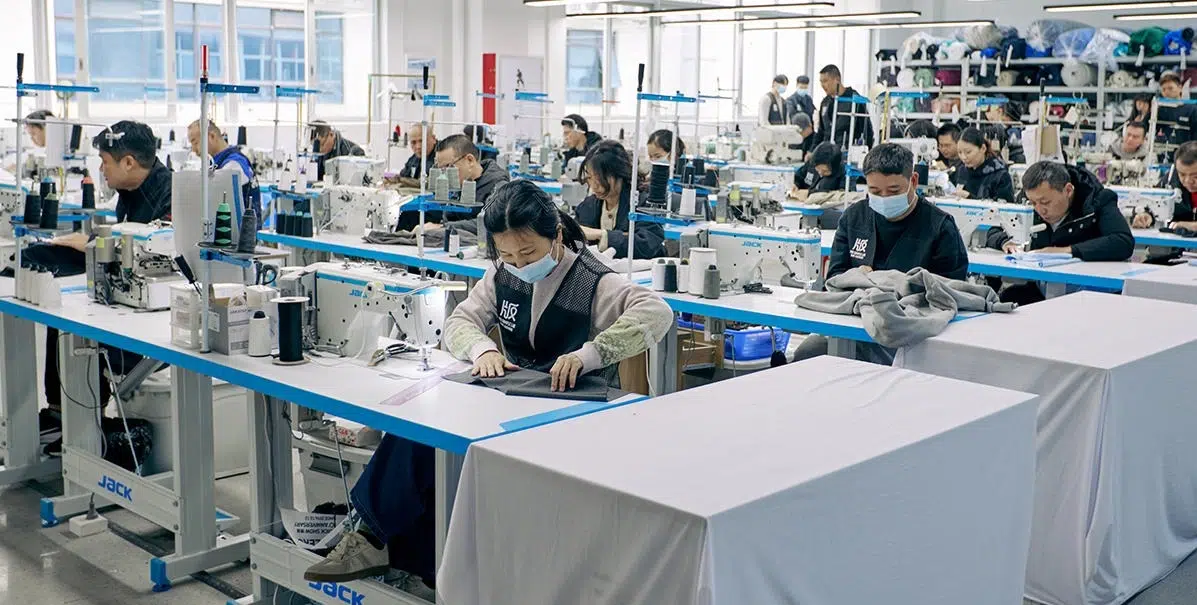
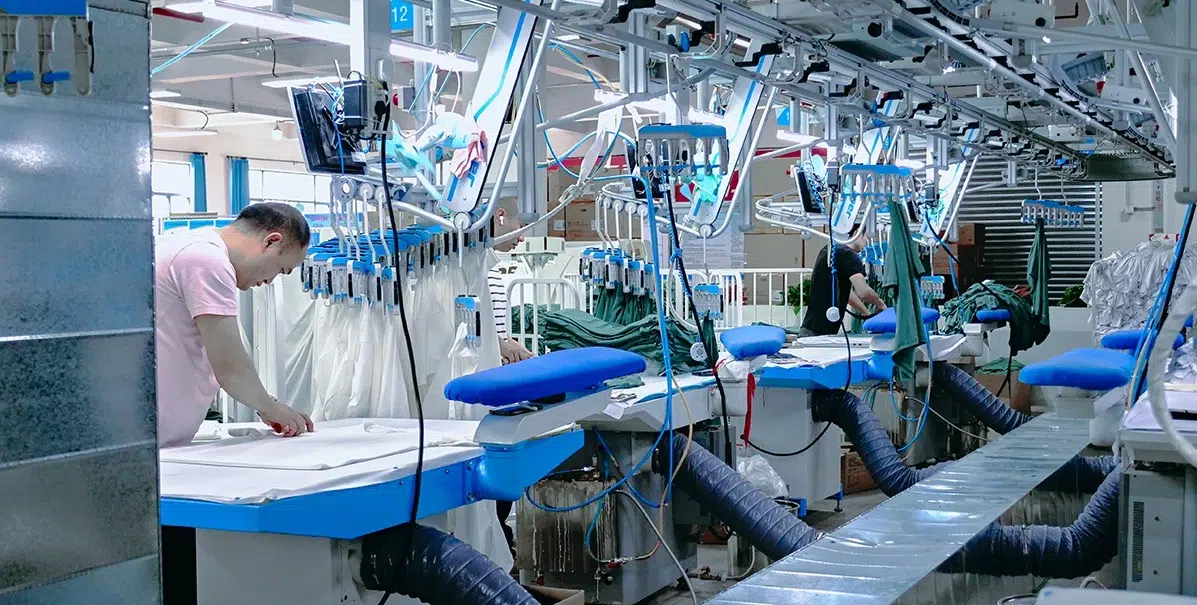
A legitimate scrubs factory represents a vertically integrated facility that manages the entire garment lifecycle under one roof—from strategic raw material sourcing to meticulous pattern development and final assembly . By maintaining direct ownership of the production lines, these manufacturers offer unparalleled transparency into quality control and lead-time management.
Most established factories operate via two core collaboration frameworks:
-
OEM (Original Equipment Manufacturer): This model empowers buyers with maximum creative autonomy. The manufacturer translates your proprietary designs into physical products, offering granular customization of fabric blends, ergonomic fits, and complex branding details .
-
ODM (Original Design Manufacturer): For brands seeking an accelerated time-to-market, factories leverage their deep industry expertise to provide turn-key designs that require minimal modification before launch.
What is a Trading Company?
A scrubs trading company acts as an intermediary between buyers and factories. It functions as a sourcing company. Based on your requirements, it identifies suitable factories. And earns a profit margin on the transaction.
The Role of Certification at Scrubs Manufacturing
You may often come across certifications such as ISO, CE, WRAP, and BSCI while browsing products. But do you know exactly what these certifications are for? How do they help mitigate safety hazards in scrubs production? Let’s take a closer look at the specific purposes of these certifications.
| Certification | Strategic Focus | Essential Requirements |
|---|---|---|
| ISO 9001 | Quality Management | Standardized processes and traceable management systems. |
| WRAP | Social Responsibility | Zero child labor, legal payroll, and strict fire safety compliance. |
| BSCI | Factory Credentials | Mandatory for exports. Proves legal operation and facility standards. |
ISO:
ISO 9001 is one of the most authoritative certifications in the scrubs manufacturing industry. Factories cannot simply “apply and receive” ISO certification. Only legitimate manufacturers with standardized processes, stable production capacity, and a traceable management system can obtain ISO certification.
WRAP:
Factories that apply for and pass WRAP certification must:
- Hold a valid business license
- Have no child labor
- Maintain accurate attendance and payroll records
- Be fully equipped with fire safety equipment
- Dispose of wastewater, exhaust gases, and other waste in compliance with regulatory requirements
BSCI:
BSCI certification is virtually a standard requirement for exporting scrubs to Europe and the United States. Scrubs factories must hold BSCI certification. This means the factory must have legal operating credentials. Fabric warehouses and garment production areas must be physically separated. Fire safety facilities must be in place. Pure trading companies are not eligible to apply for BSCI certification.
In summary, ISO certification focuses on product quality control; WRAP certification emphasizes social responsibility; and BSCI certification covers factory credentials and production capacity.
Selecting factories with these certifications can help mitigate procurement risks.
Scrubs Factory VS Trading Company: Pros and Cons
| Scrubs Factory | Trading Company |
|---|---|
|
✔ ADVANTAGES
|
✔ ADVANTAGES
|
|
✘ CHALLENGES
|
✘ CHALLENGES
|
Scrubs Factory
Pros
- There is no doubt about this.A scrubs factory offers lower prices. The product quality remains the same. Trading companies usually charge more. Additionally, higher minimum order quantities typically result in even more favorable pricing.
- Direct communication reduces wait times. And minimizes misunderstandings.
- Protects your intellectual property.
- Factories have a deeper understanding of the market and the practical challenges of production. They can provide advice on compliance.
- Often suitable for original product development. They support customization and scalable brands.
- They can provide direct advice on design and production challenges.Reducing trial-and-error costs.
- You can closely monitor the production process. This shortens production time and increases transparency.
Cons
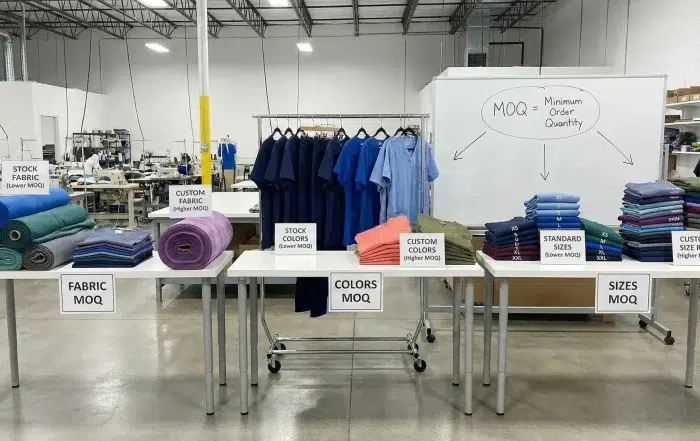
- There is generally a minimum order quantity (MOQ).
- Many suppliers rely on agents or do not work directly with small buyers.
- It is relatively difficult to find a genuine Scrubs Factory. Many trading companies pose as factories.
Trading Company
Pros
- Supports small-batch orders
- Wide sourcing reach
- Provides superior customer service. They place a strong emphasis on customer satisfaction
- Offers a wide variety of scrubs styles
- Can access hard-to-find factories or materials
Cons
- Complex procurement process
- Lacks technical expertise, unable to handle production issues involving complex specifications
- Higher unit prices. Increases profit margins and operating costs.
- Longer communication times and slower feedback
Trading companies excel in flexibility and convenience. However, this comes at the expense of cost-effectiveness. And direct control over the production process.
Of course, there is no absolute “best” choice. It depends on your order quantity, product complexity, and other factors.
Which Is Better: A Scrubs Factory or a Trading Company?
The right choice depends on your business type.
General hospitals typically have stable, high-volume purchasing needs. They are better suited to working directly with factories. This approach reduces costs and allows for greater control over production.
Small clinics, veterinary clinics, and other facilities with limited staff are better off using a trading company. This offers greater flexibility and a wider range of options. Most importantly, trading companies typically offer lower minimum order quantities (MOQs). If your purchasing volume is low, a trading company will be better able to meet your needs.
Why is it So Difficult to Find a Scrubs Factory?
When you want to source directly from a scrubs factory. You’ll find there are so many options. This can be overwhelming. Among these “factories,” there are many trading companies in disguise. They use the “scrubs factory direct” label to confuse you. And vie for your business. At this point, some inexperienced sourcing managers may have already made the wrong choice.
Fake Factories
As you browse, you’ll encounter distributors, sourcing companies, and traditional factories. Your first major challenge is distinguishing between them.
Trading companies often market themselves in ways very similar to factories. Without experience, it’s often hard to tell them apart. They typically emphasize their capabilities. And they may make promises even if they lack the necessary technical expertise.
Many Factories Sell Directly to Customers
Due to differences in global manufacturing operations. Contacting factories directly is often not straightforward. Bypassing “middlemen” such as trading companies is particularly complex. Establishing contact with key personnel at the right factory usually takes a long time. This involves a difficult process.
First, many factories do not appear in common business directories. Additionally, some factories require collaboration through designated channels. These channels typically include agents on platforms like AliExpress and Alibaba. Therefore, contacting factories directly through these platforms is virtually unrealistic. This situation is particularly evident in China.
Furthermore, factories often set certain barriers, such as high minimum order quantities (MOQs). These restrictions make it difficult for companies to collaborate directly with factories without going through distributors.
Great Distances Make Factory Inspections Inconvenient
Even within the same country, finding a suitable factory and assessing its production capabilities is no easy task. When sourcing hospital scrubs from abroad. Conducting on-site factory inspections presents significant challenges. If the supplier is located on the other side of the globe. These issues are further magnified. A successful procurement depends on the factory’s reliable credentials. The information asymmetry caused by distance makes assessment even more difficult. Different national legal systems add to the complexity of compliance evaluations. Inconsistencies in industry practices can also lead to misjudgments.
How to Distinguish Between Scrubs Factories and Trading Companies
Distinguishing among the many suppliers is a challenge in itself. Even if you know what to look for, you may still feel confused when making an actual selection. The key to distinguishing between factories and trading companies lies in verifying their “production control capabilities”. Rather than relying on “verbal promises,” Here are some points to consider to help you quickly identify trading companies and factories.
Check the Company’s Website
A qualified factory should have its own independent website. Unlike stores on Amazon or Alibaba. A genuine factory’s website typically features photos of the facility. And also have business licenses and ISO certifications. Authentic factories usually specialize in a single or a few product categories. And possess deep expertise in specific materials or manufacturing processes. If a website covers multiple categories and materials of scrubs without a clear core product line. It is likely a trading or sourcing company. Also, check if the website offers products for sale. Unfortunately, it is highly probable that it is a trading company.
Request Samples
Ask the other party to provide samples. Factories can usually provide them quickly. And explain the manufacturing details. Sourcing companies often hesitate or are unable to clearly describe the production process.
Test Their Adaptability
You can propose last-minute modifications or complex requirements to observe their response. A genuine factory can assess production schedules and manufacturing feasibility. And provide concrete solutions. Sourcing companies, however, tend to give vague responses and take longer to reply.
Ask Direct, Key Questions
Inquire about their production processes, equipment configuration, scrub MOQ, and other details. Factories usually provide specific and transparent answers. Purchasing companies tend to evade questions or offer vague, generalized responses.
Conduct an On-Site Factory Inspection
Visiting the factory in person is the most effective way to verify. Of course, you should also be aware that some companies may use a supplier to pose as their own factory. Therefore, during the visit, you need to check for the company’s information on-site.
Verify Clients and Reputation
Request recommendations or case studies from previous clients. You should review these materials carefully. They provide direct evidence of past cooperation. A consistent record usually reflects stable performance. It often indicates genuine production capacity.
Pay Attention to Communication
Usually, communication from a factory is clear, direct, and professional. They can quickly understand your needs and provide feedback. In contrast, purchasing companies tend to overemphasize non-technical issues. Such as their services and after-sales support.
Be Wary of “Unconditional Agreements”
If the other party quickly responds with “No problem” to all your requests. You should remain highly alert. A genuine factory usually sets clear boundaries. These boundaries are based on real production capacity. They also reflect actual manufacturing processes. A reliable factory does not aim to please at all costs.
How to Spot a Reliable Scrubs Manufacturer
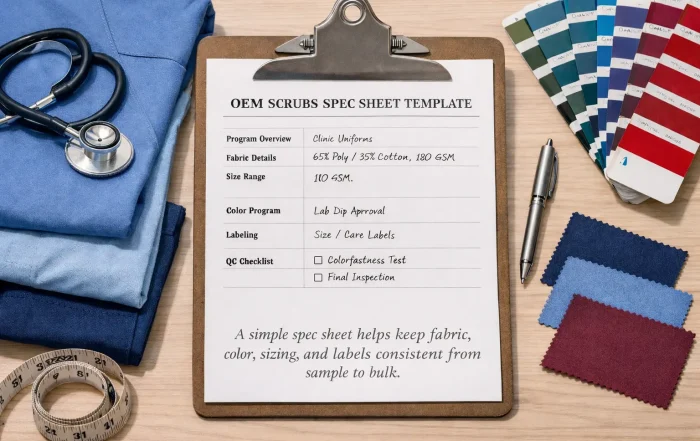
When vetting potential partners, a distinct pattern emerges among manufacturers with true production depth . Unlike intermediaries who typically stall after the quotation stage, a dedicated manufacturer provides technical, verifiable feedback on critical specs—ranging from fabric GSM (grams per square meter) to precise colorfastness thresholds. This level of granularity in early-stage communication is the first hallmark of a reliable, production-centric partner.
Industry leaders like Lano Wear exemplify this integrated manufacturing model. By consolidating fabric selection, pattern engineering, and final garment assembly within a single controlled ecosystem, they effectively eliminate the ‘uncertainty tax’ that usually plagues third-party outsourcing . Operating as a true factory, rather than a mere intermediary, ensures that every link in the supply chain is transparent and accountable.
This vertical integration provides a clear, risk-mitigated roadmap for the customization process, ensuring that critical milestones—such as meticulous sizing trials and color approvals—are executed with professional precision. These standardized procedures simplify the path to establishing stable, long-term strategic partnerships. Ultimately, choosing a specialized medical scrub manufacturer is more than a cost-saving measure; it is a strategic investment in production control and long-term supply chain resilience.
Common Risks in Bulk Medical Scrubs Sourcing
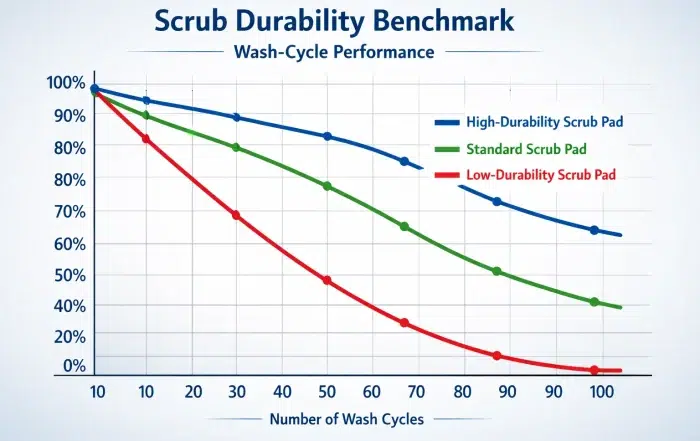
- Overemphasizing low prices. Focusing solely on unit price when sourcing bulk medical scrubs. It is often the most common pitfall. Low-priced products typically indicate poor fabric durability. This ultimately leads to frequent replacements. Actually, it increases long-term costs.
- Lack of standardized sizing and tailoring.Many buyers neglect proper sizing standards. They often rely on inaccurate size charts. This approach can lead to poor fit and discomfort. You should conduct a sizing trial before mass production. You can test samples with a group of employees. This step helps ensure better fit and consistency.
- Choosing the wrong fabric.
- Underestimating logistics and delivery times. Many buyers underestimate how long logistics and delivery can take. You should always include a buffer when estimating delivery time. This buffer helps you handle unexpected issues. These issues may include delays or shipping errors.
Conclusion: Aligning Your Sourcing Strategy
Ultimately, the distinction between a trading company and a dedicated manufacturer extends far beyond the initial unit price . For high-volume institutional procurement, such as general hospitals, establishing a direct partnership with a factory is a prerequisite for operational excellence . This model grants sourcing managers granular oversight of product consistency and the technical depth required for complex, bespoke customization.
However, procurement is not one-size-fits-all. For boutique medical facilities or clinics with fewer than 20 staff members, the agility and lower MOQs offered by a trading company may present a more pragmatic solution . The key to a resilient supply chain lies in aligning your supplier’s core capabilities with your specific organizational scale. Whether you prioritize the direct control of a manufacturer or the flexibility of an intermediary, your choice should always be anchored in long-term stability and certified compliance
About This Analysis
This was written with the understanding that it will be used by procurement managers and healthcare administrators who need to establish a reliable medical apparel supply chain before requesting bulk quotations. Lano Wear operates from a vertically integrated manufacturing perspective, so this guide concentrates on long-term supplier reliability, quality control consistency, and risk mitigation rather than just initial unit pricing.
Need help turning your hospital's branding and staff sizing requirements into a standardized bulk production plan?
Talk with the Lano Wear team about a custom scrubs programKey Takeaway
The most sensible starting point for bulk procurement is defining your specific operational needs—such as fabric durability specifications and staff sizing profiles—not just browsing a standard catalog. With a defined technical scope, comparing potential manufacturing partners becomes a much more straightforward process.